The Japanese Toys That Filled Our Childhood Wish Lists
Revisit Japanese games, robots, handhelds and small toys Americans knew in the 70s or 80s, with original…
 By Denver Boter10 min read
Japanese toys reached American children through toy stores, television, arcades and relatives’ suitcases. These examples belong to the 70s or 80s, though their Japanese names and American packaging did not always match.
1. Space Invaders at the arcade
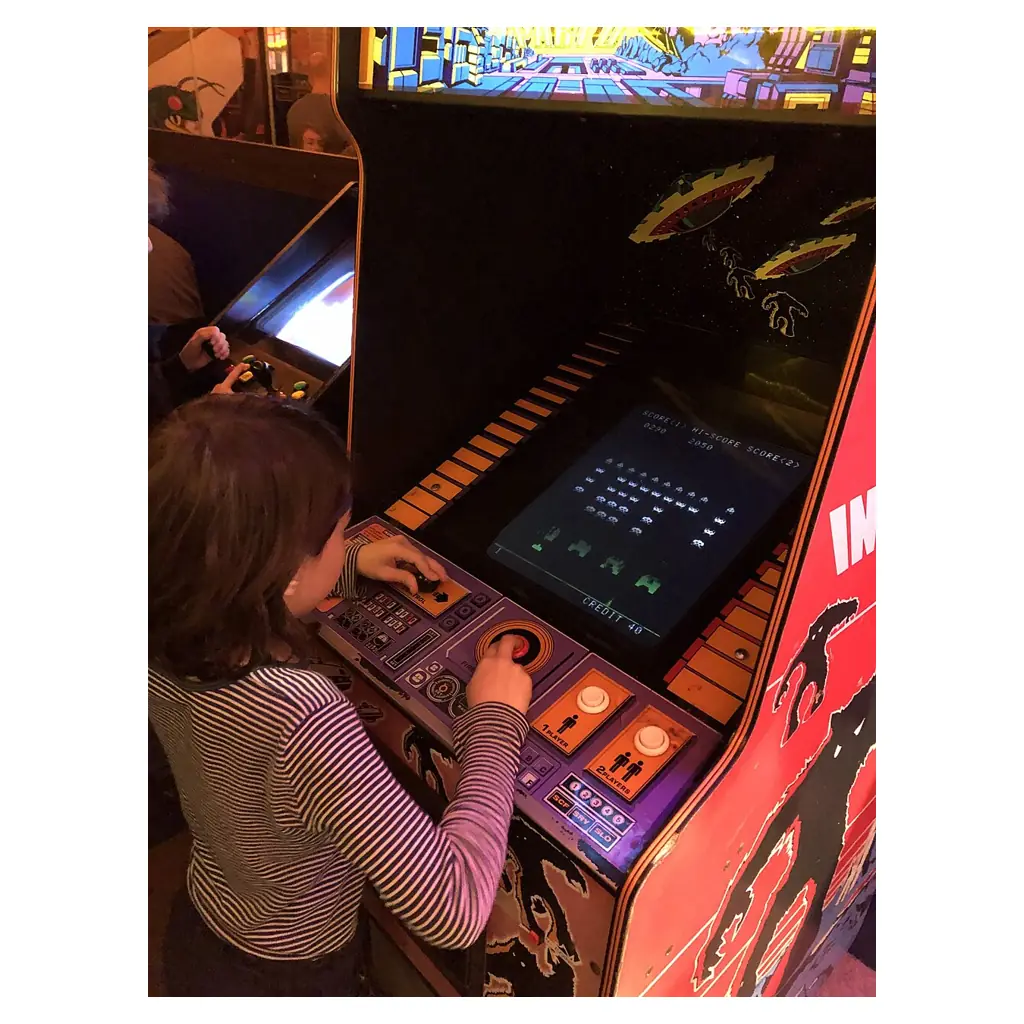
Taito released Space Invaders in Japan in 1978. Its advancing rows of aliens gave a waiting player something easy to understand before a coin entered the machine.
The Atari 2600 adaptation brought the game into American homes in 1980. The console was American, while the game it carried came from a Japanese developer.
That distinction is part of the story: the country behind a game and the company selling its home hardware were not always the same.
2. Pac-Man and the yellow character everywhere
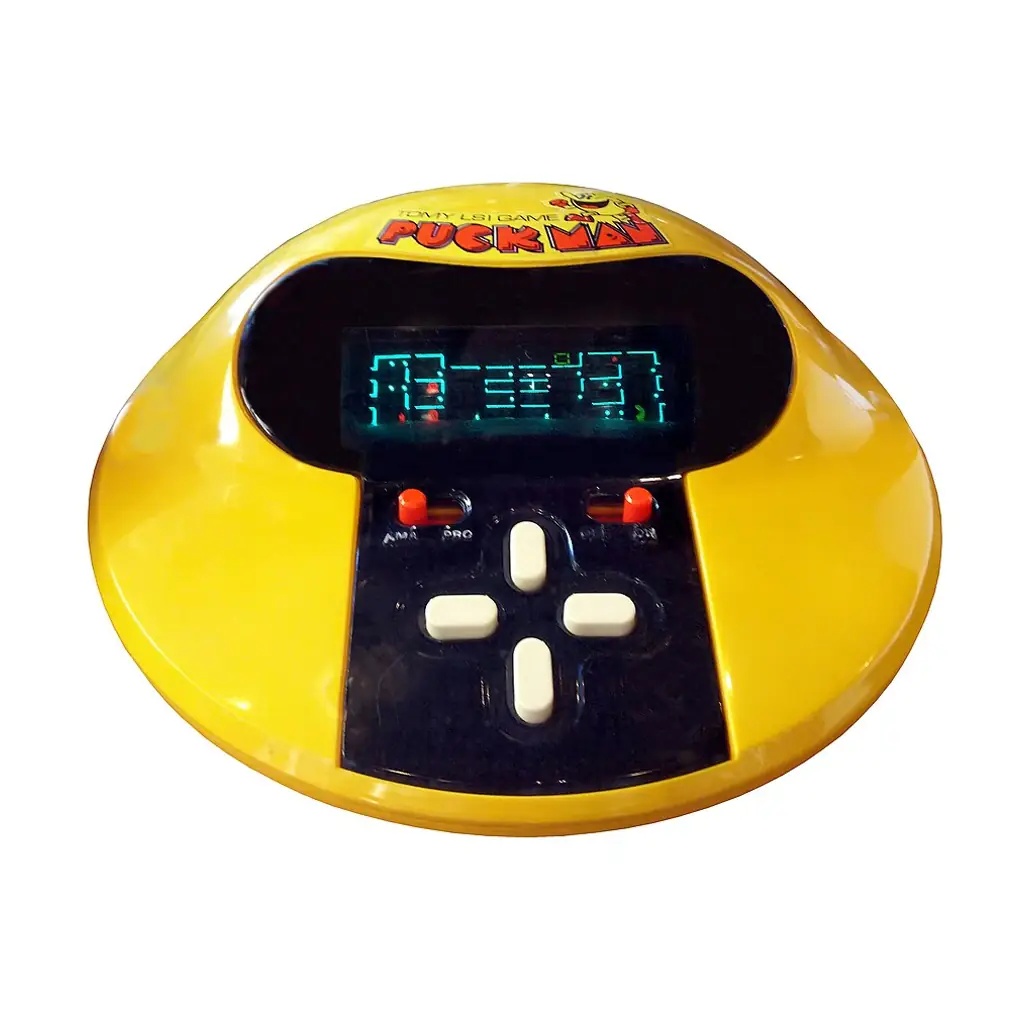
Namco’s Pac-Man arrived in 1980, with Midway handling its American release. The maze, dots and pursuing ghosts supplied a clear game without a space-war setting.
The character also moved beyond arcade cabinets into toys and household goods. A child could recognize Pac-Man without being a skilled player.
Different home adaptations did not always look like the arcade original. The familiar name covered experiences that depended on the machine a family owned. The pictured handheld is a Japanese-market Tomy Puck Man from 1981, a separate product from the arcade cabinet.
3. Donkey Kong and the barrel jump
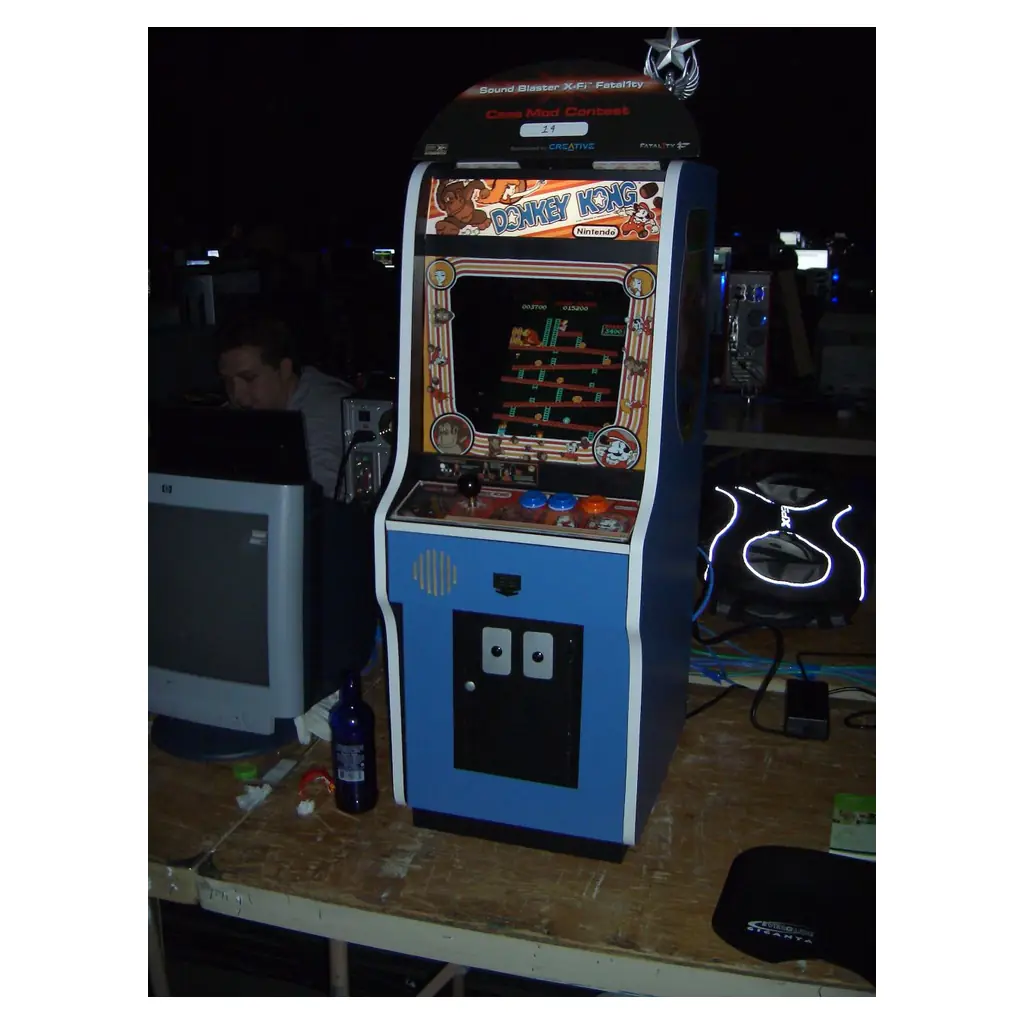
Nintendo’s Donkey Kong appeared in arcades in 1981. A small character climbed platforms while avoiding barrels, making the goal easy for a spectator to follow.
The player character became Mario, but this was not yet the side-scrolling Mushroom Kingdom adventure. The original screen presented a different kind of challenge.
Watching someone else nearly reach the top could be as memorable as taking a turn. The arcade was a shared setting as well as a collection of machines.
4. The Nintendo Entertainment System
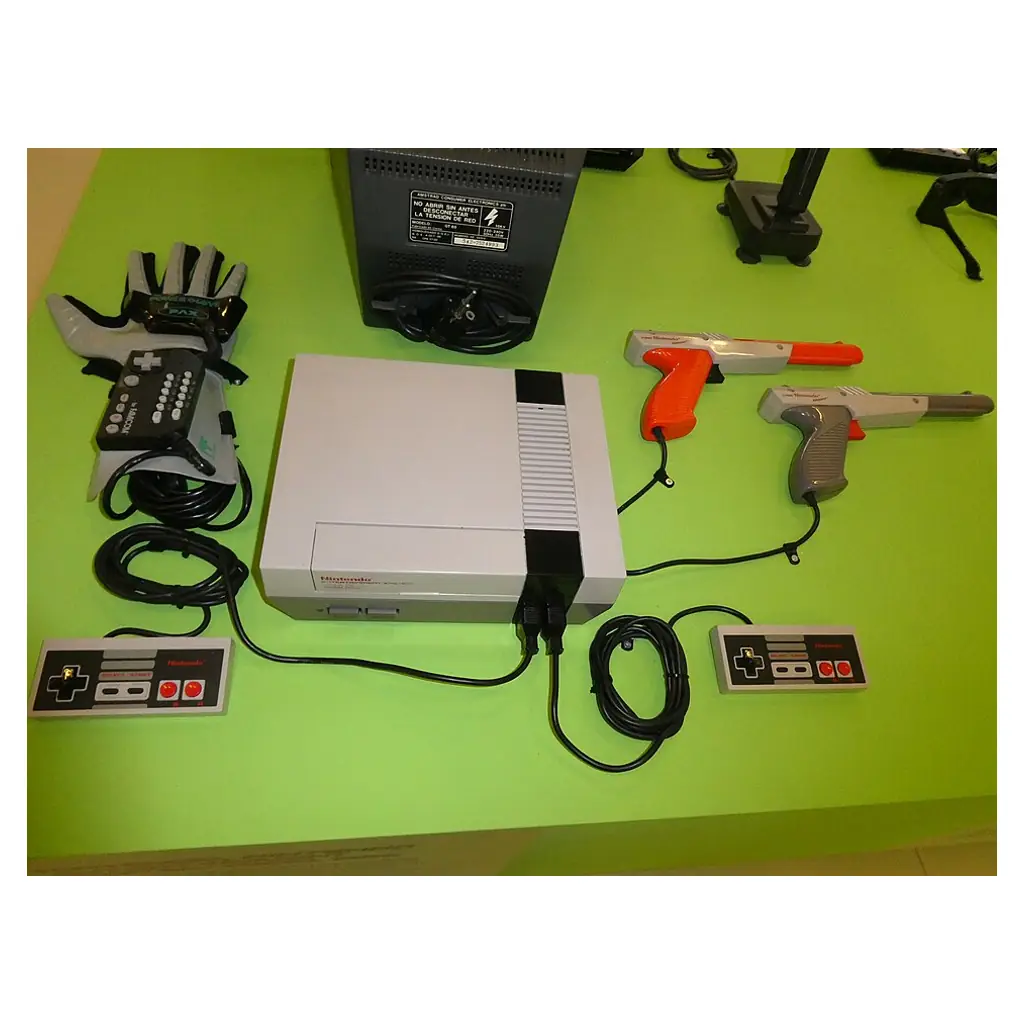
Nintendo began its American NES rollout in 1985. The gray console and rectangular controller became recognizable parts of many late-80s living rooms.
In Japan, the related Family Computer had a different appearance and name. A photograph of a Famicom should not be labeled as an American NES.
The system depended on physical cartridges and a television connection. Choosing a game meant choosing an object, often kept in its own sleeve or box.
5. Super Mario Bros. at home
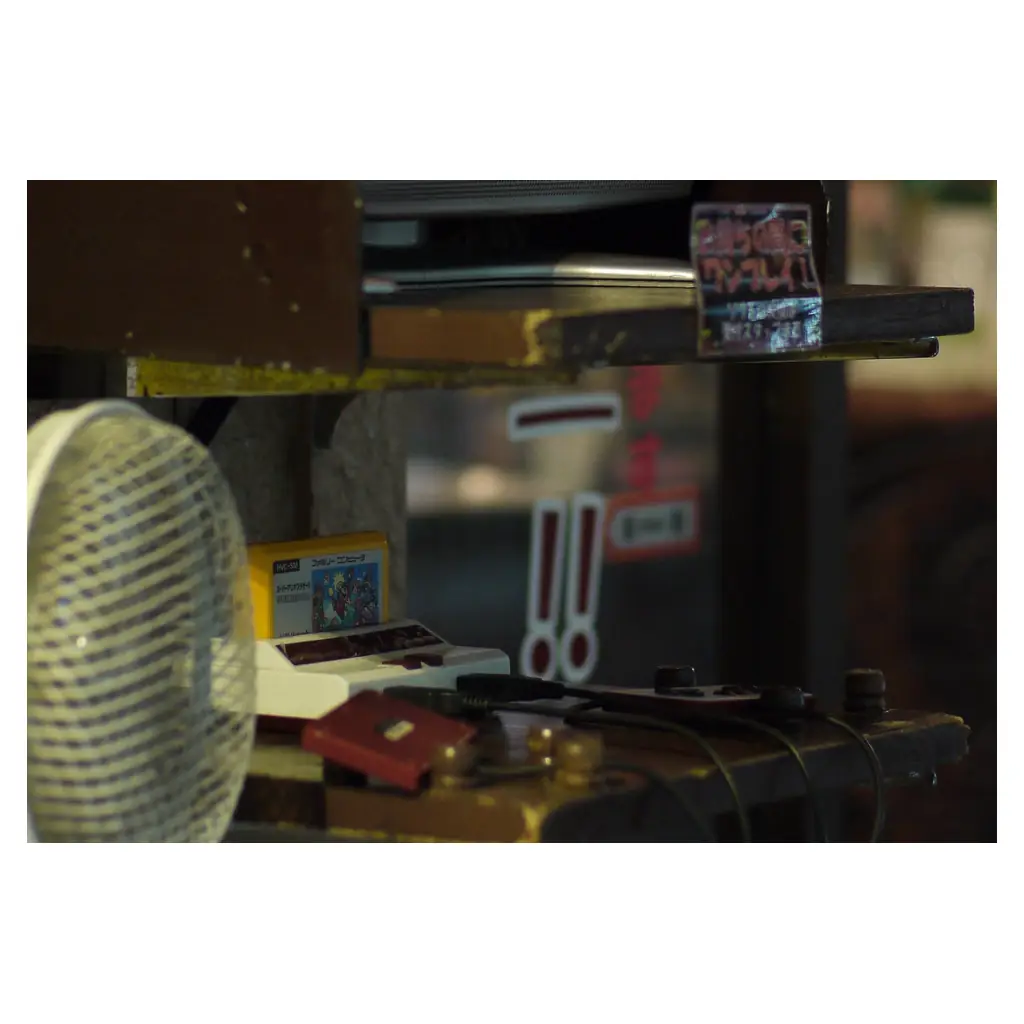
Super Mario Bros. turned running, jumping and discovering hidden spaces into a home-console adventure. Its American success helped make Mario familiar far beyond an arcade visit.
A controller gave the player only a few buttons, but the levels demanded timing. Another person in the room could point out a missed pipe or block.
The game’s Japanese origin is distinct from its American living-room setting. Both belong in the memory without pretending every child owned the same bundle.
6. The Legend of Zelda cartridge
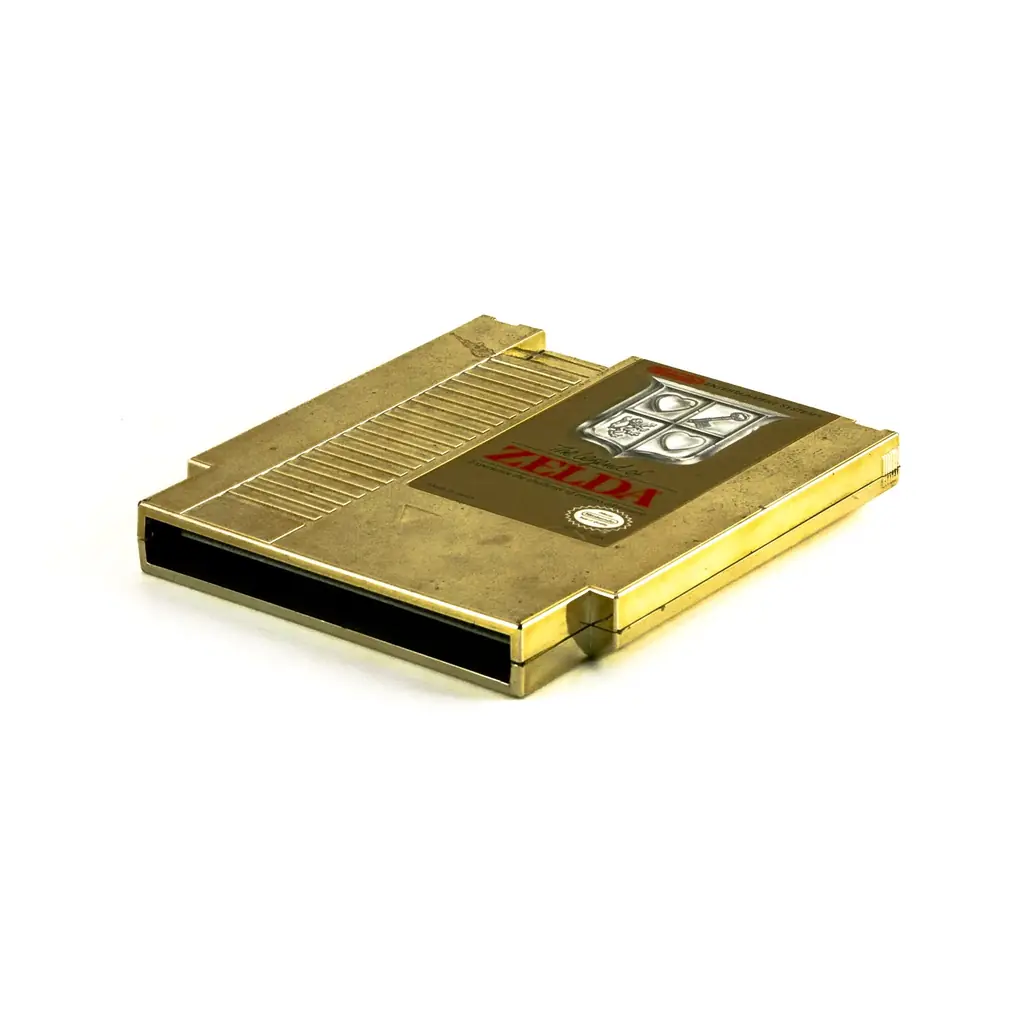
The Legend of Zelda offered exploration, hidden routes and a world that was not finished in one sitting. The American NES edition became recognizable for its gold-colored cartridge.
A player had reasons to make notes or compare discoveries with a friend. Progress depended on learning the landscape as well as quick reactions.
This was a different pleasure from a short arcade turn. The unusual cartridge helped make the game an object worth remembering even before it entered the console.
7. The first Game Boy
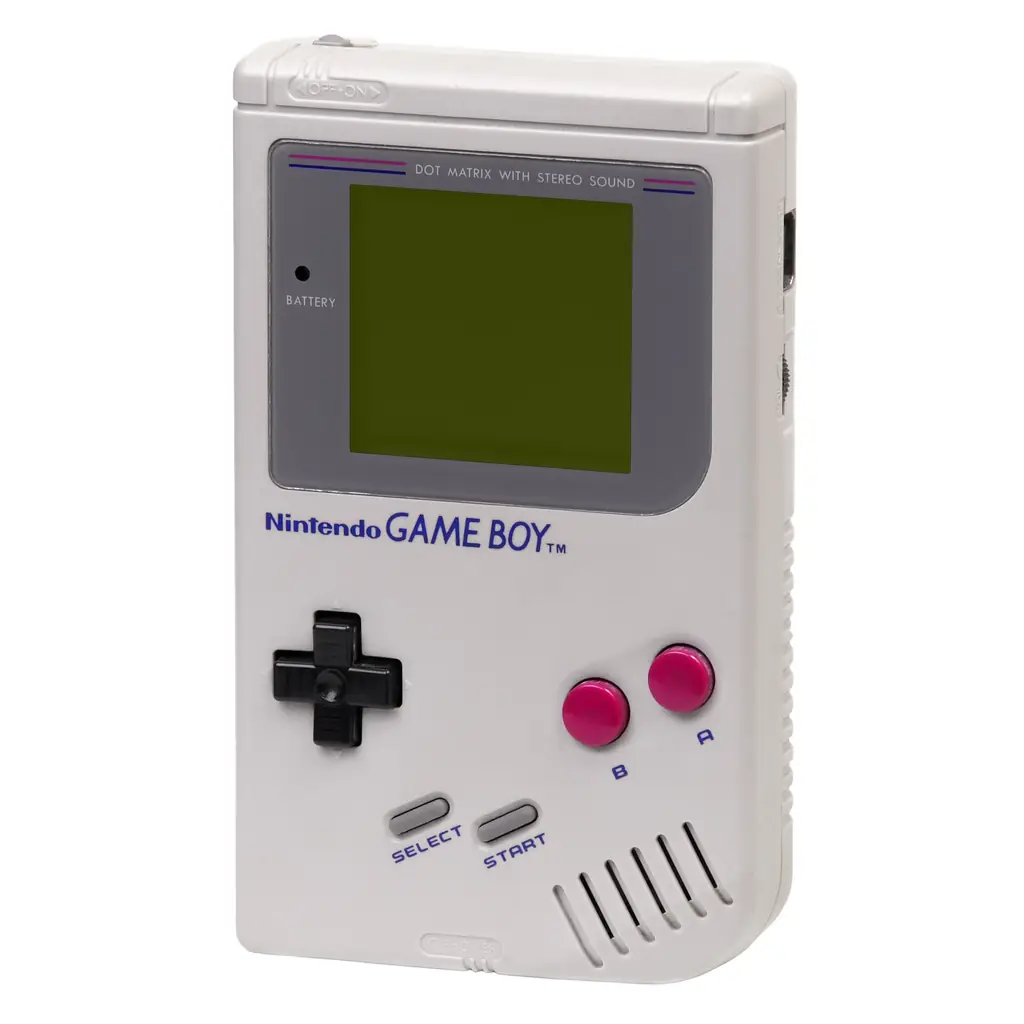
Nintendo released Game Boy in 1989. The handheld’s small screen and replaceable cartridges made it a late arrival in this two-decade window.
A player could take a console game away from the family television. The physical controls and screen were contained in one compact body.
It belongs beside the portable players in our Japanese electronics retrospective, but it should not be moved backward into a 70s childhood.
8. Game & Watch handheld games
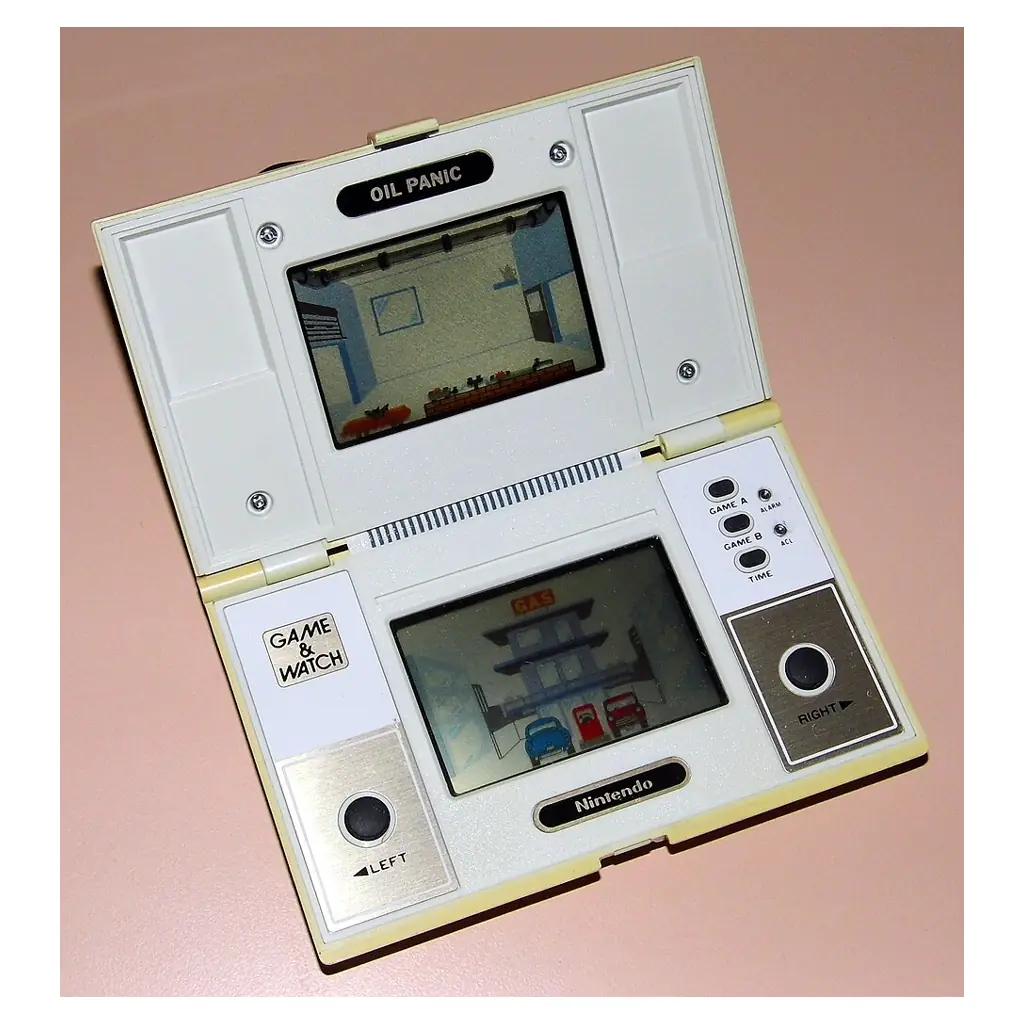
Nintendo’s first Game & Watch title, Ball, appeared in 1980. The LCD figures occupied predetermined positions rather than a full, changing video-game picture.
A dedicated unit usually meant a particular game, not a library of interchangeable cartridges. The clock function helped explain the second half of its name.
This was portable play before Game Boy. A modern reproduction may look familiar, but its production date and features need to be kept separate from an original. The pictured Oil Panic unit is a 1982 example from the Game & Watch family.
9. Mega Man on the NES
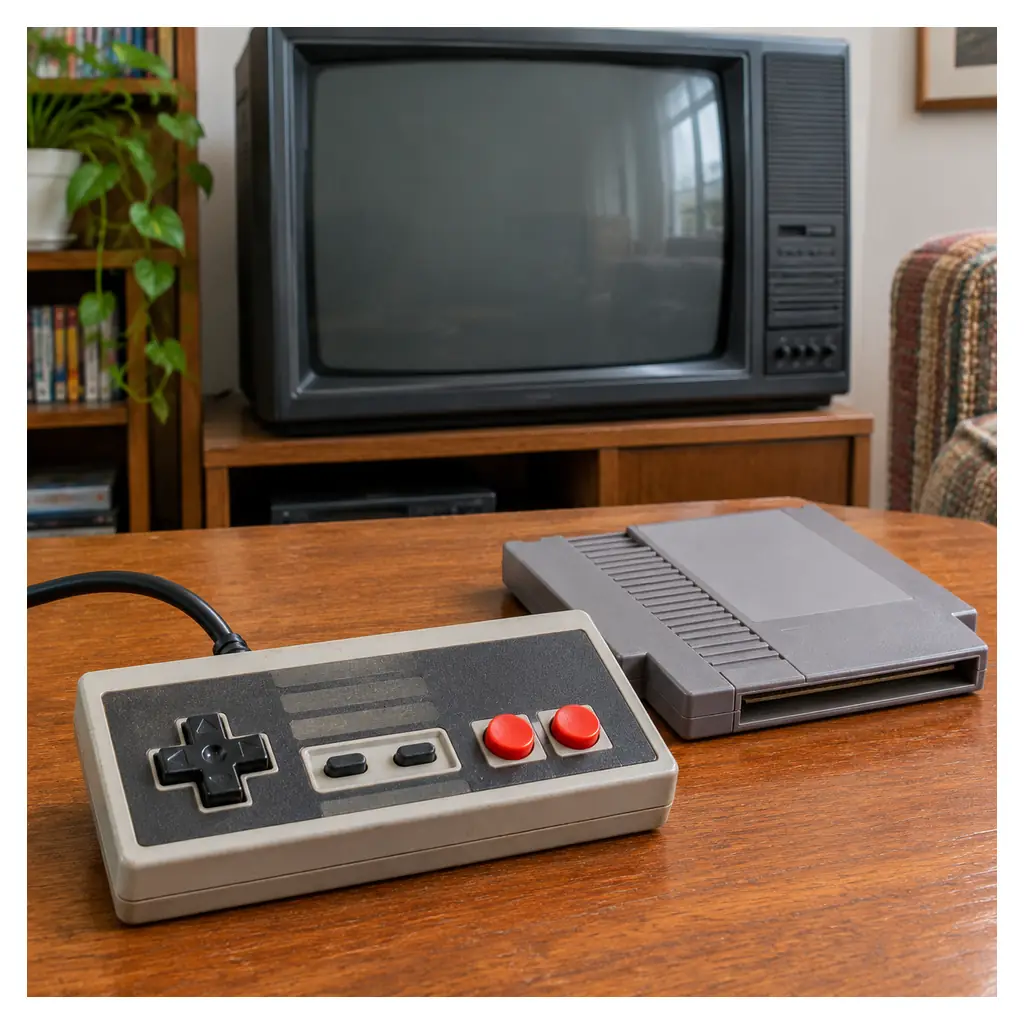
Capcom launched Mega Man in 1987. Choosing stages and confronting robot opponents gave the game a different structure from simply moving through one long road.
The small blue character had a clear silhouette and a demanding set of jumps. Losing a life could send a player back to try the same stretch again.
The robots fit a wider fascination also visible in Japanese cartoons and shows on American television.
10. Transformers and the changing toy
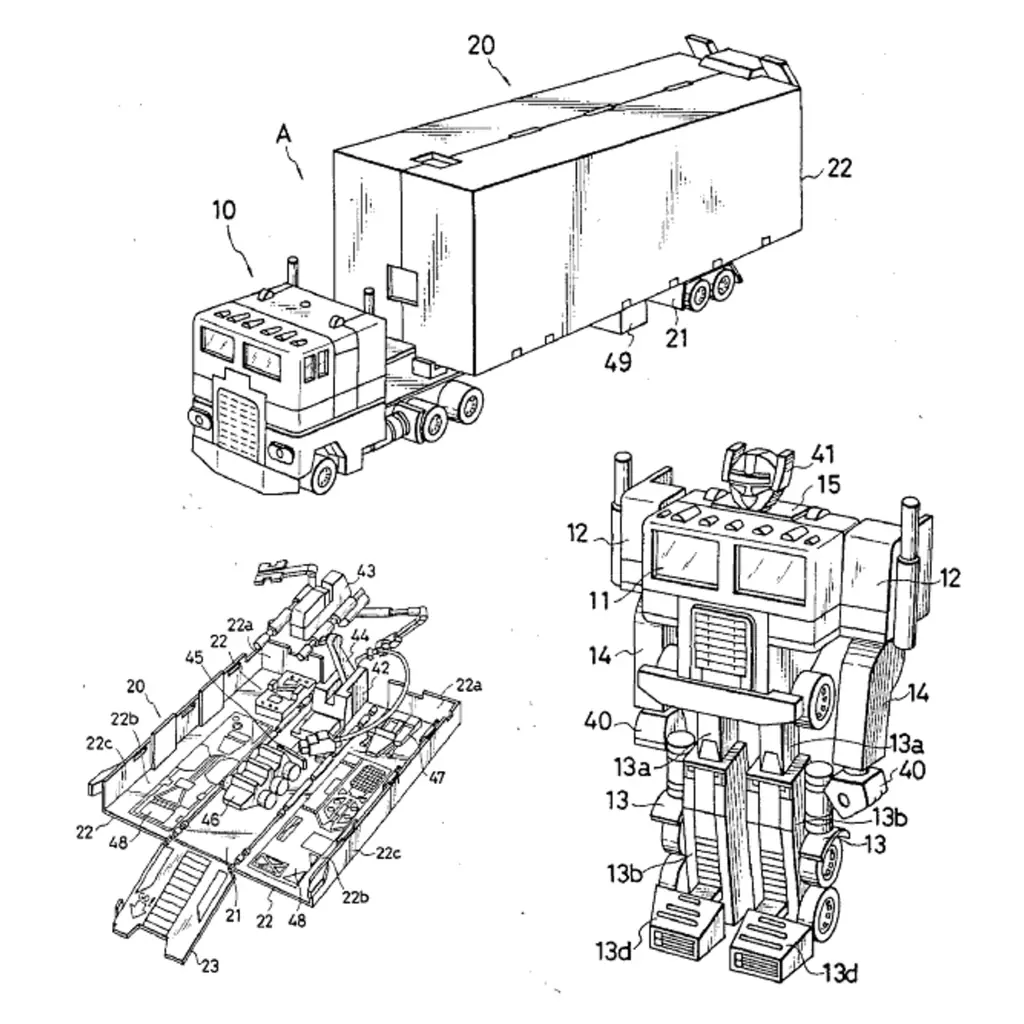
Transformers launched in the United States in 1984. The line brought together Japanese toy designs, American branding and a story developed for the international market.
The pleasure was physical: panels folded, wheels moved and a vehicle became a robot. Packaging and television helped give those mechanisms recognizable names and loyalties.
A toy’s origin is more complicated than the location of its fictional story. Takara’s earlier Diaclone and Microman designs form part of that history.
11. Voltron’s combining lions
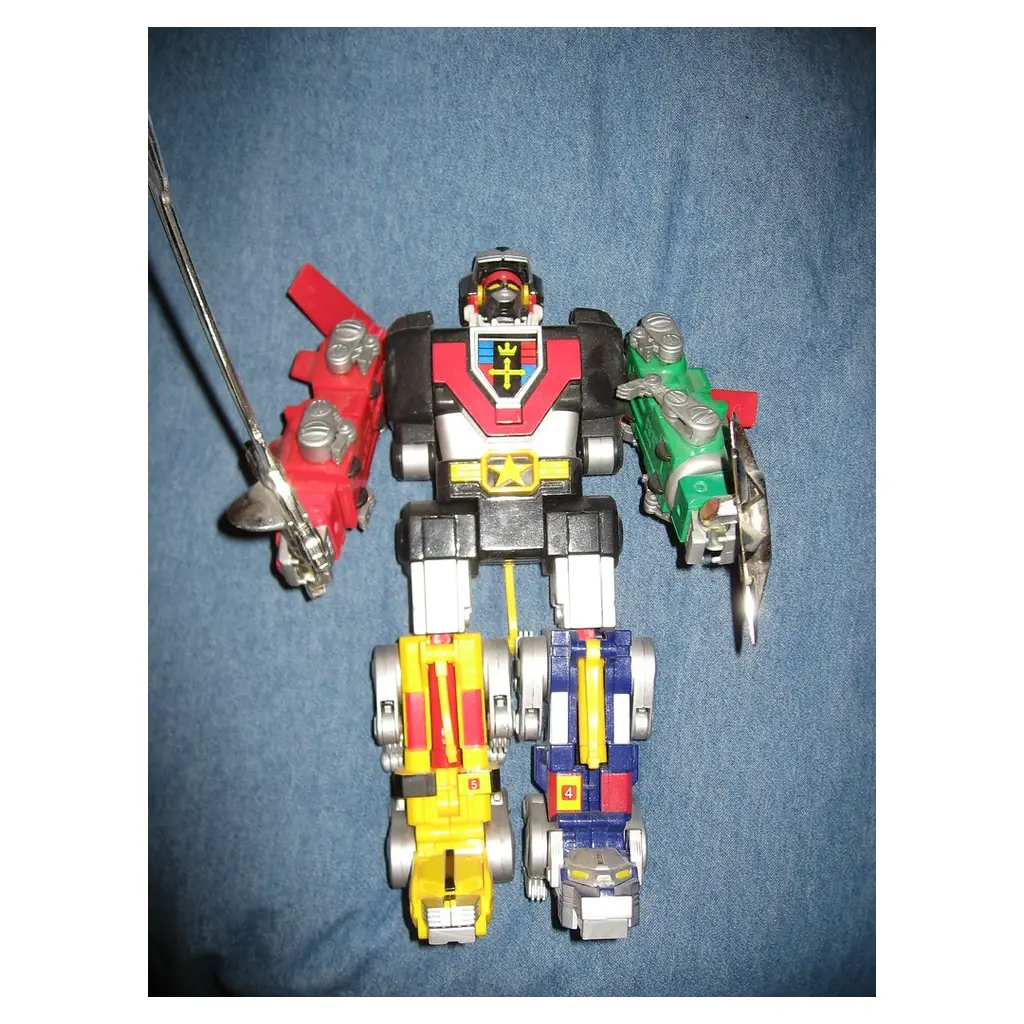
Voltron reached American television in 1984. Toy versions let children connect separate lions into the larger robot they had watched on screen.
The assembled figure depended on its parts. A missing lion mattered in a way that a lost loose accessory did not.
The show belongs to the Japanese-animation adaptations Americans watched, while particular toys differed by manufacturer, materials and release. A later reissue should not be presented as an original childhood example.
12. Micronauts and the interchangeable pieces
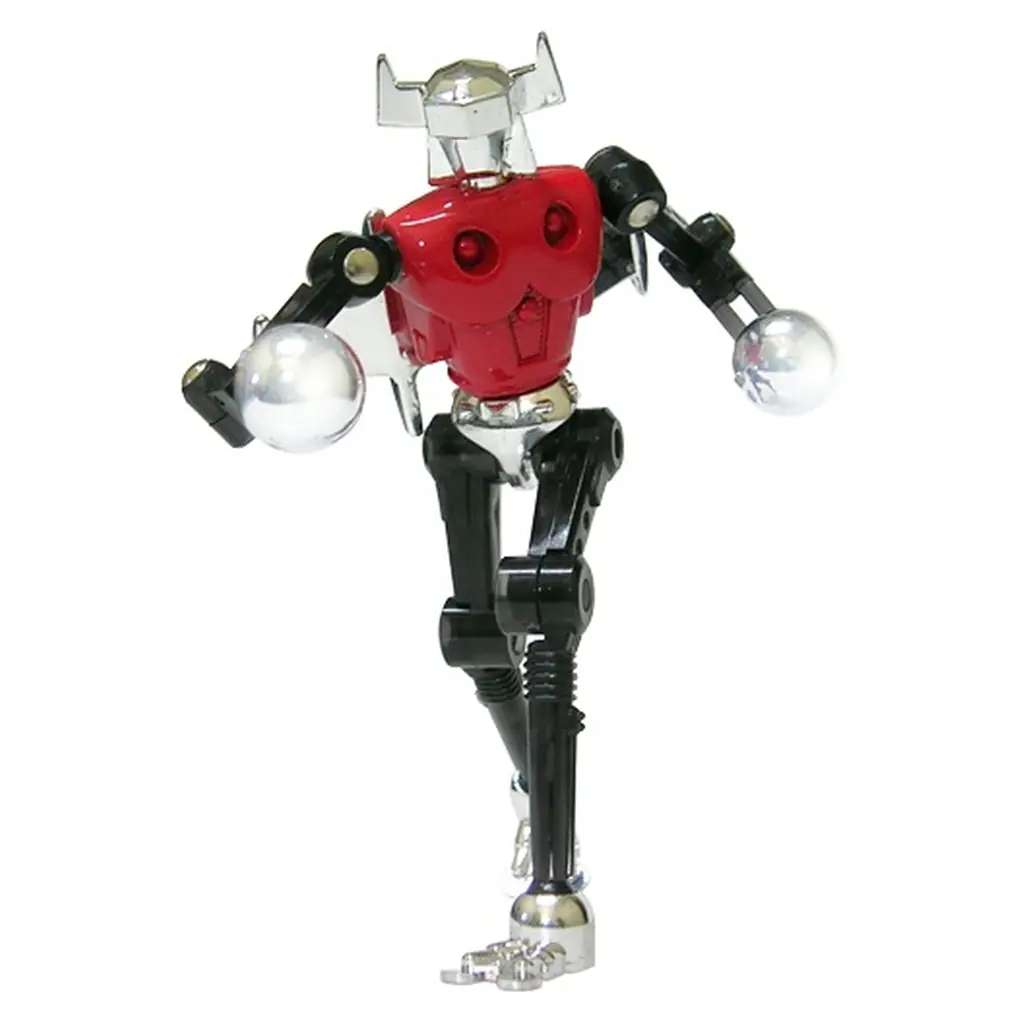
Mego’s 1976 Micronauts catalog shows a miniature world of figures, vehicles and play equipment. The line drew on Takara’s Japanese Microman toys.
Small connectors allowed parts to be rearranged, encouraging experiments beyond the picture on the box. Transparent bodies and mechanical details made the figures visually distinctive.
An American brand on the package therefore does not mean the design story began in America. Actual catalog illustrations help identify what was offered at the time.
13. Tomica die-cast cars
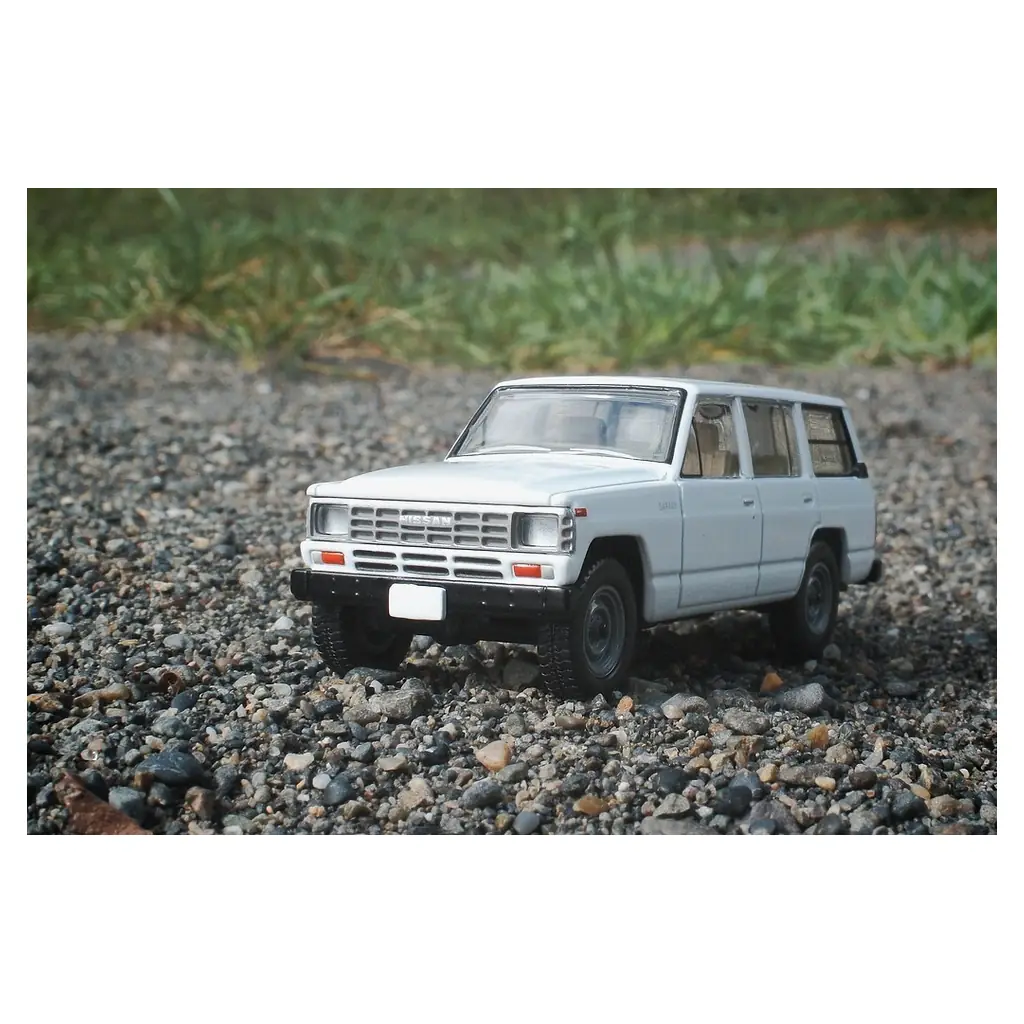
Tomy launched Tomica in Japan in 1970. The miniature vehicles offered familiar-looking cars in a size that could travel in a pocket.
A tiny box and a moving set of wheels could make an ordinary car feel worth collecting. The proportions and cast details were part of the attraction.
Toy cars also fit the small gifts families carried home from Japan. A specific model’s release date still needs checking before assigning it to a particular trip.
14. The pull-back cars sold as Penny Racers
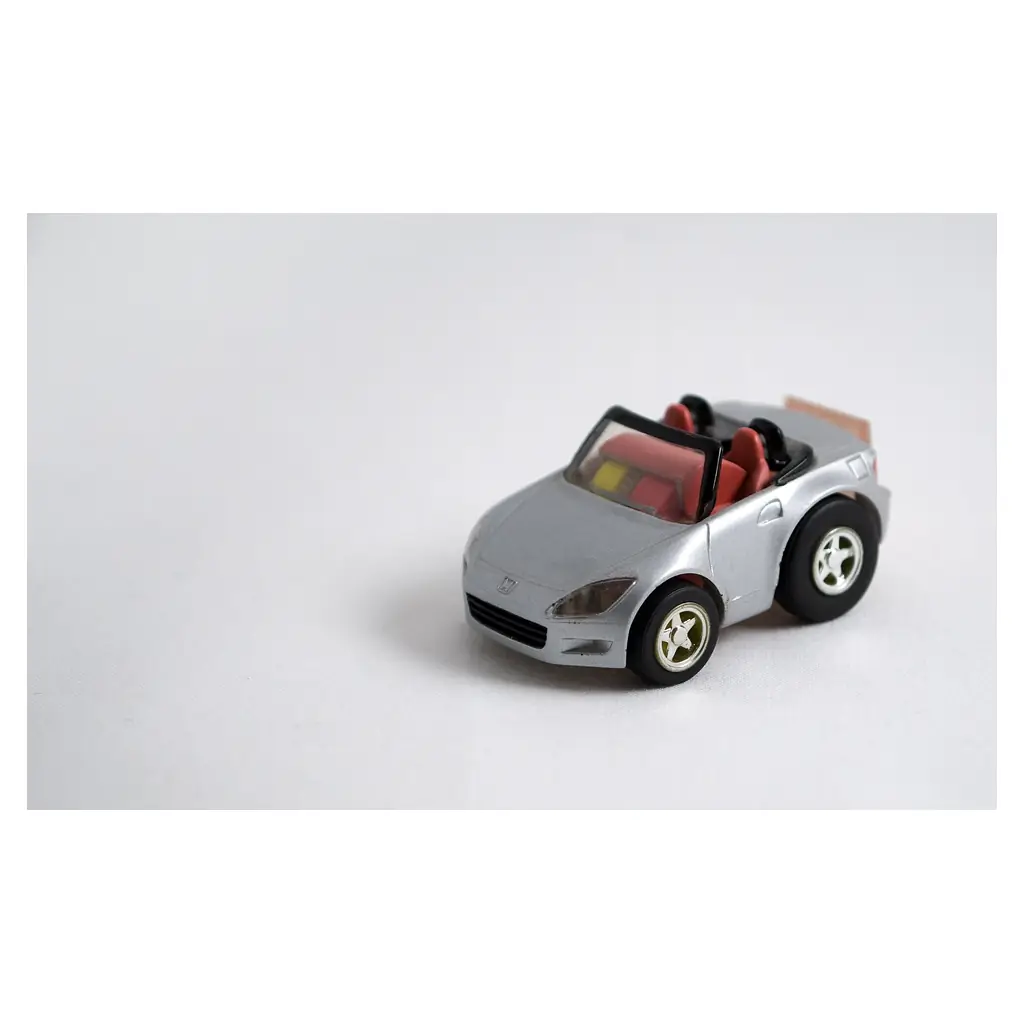
Takara introduced Choro-Q in 1980. The small, compressed car shapes concealed a pull-back mechanism that stored energy in a spring.
American readers may remember the related Penny Racers name. The play involved a real object moving across a floor rather than a vehicle controlled on a screen.
The names should not be treated as identical packaging in every market. A photograph of the box can distinguish a Japanese purchase from an American release.
15. Zoids and the moving model creature
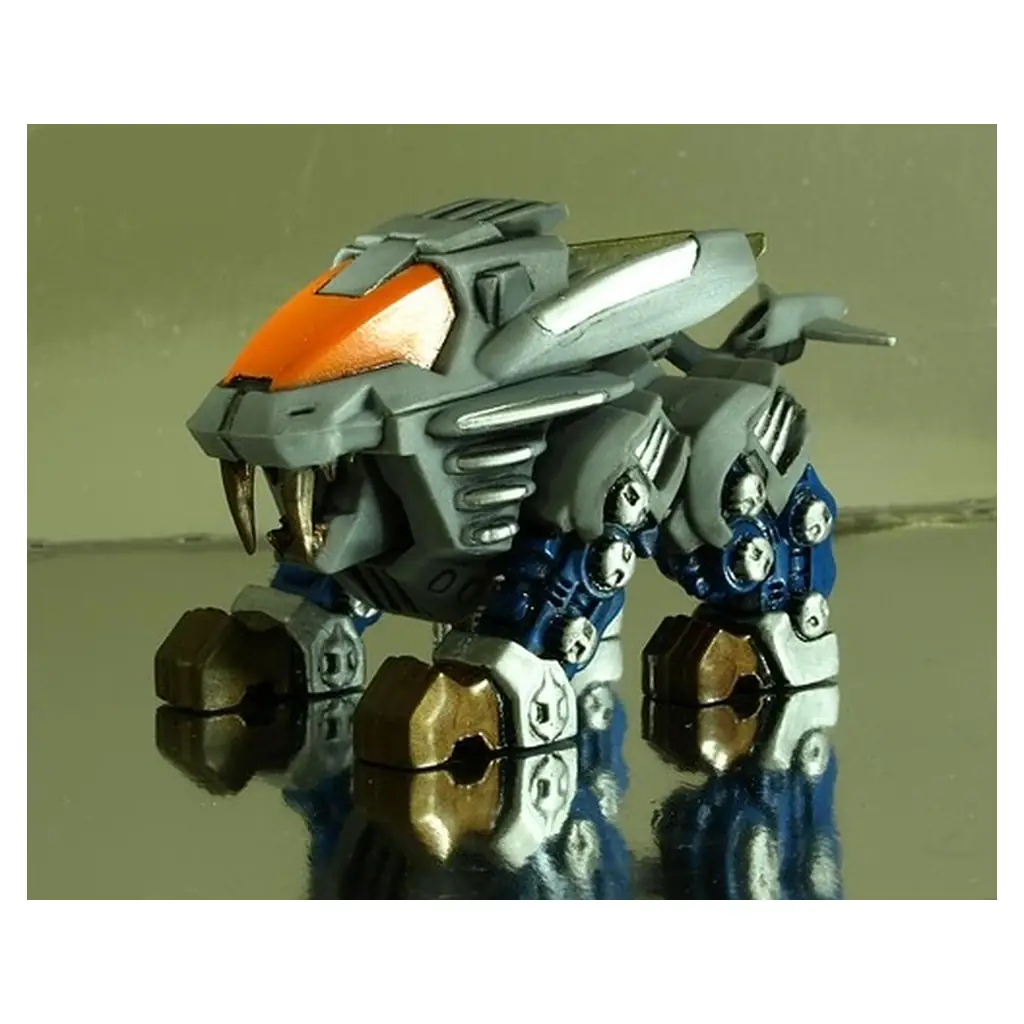
Tomy’s Zoids appeared in the 1980s as mechanical animal and dinosaur models. Assembly was part of the experience rather than merely opening a finished figure.
A motor or winding mechanism could turn a completed creature into something that moved. The visible joints and molded mechanical surfaces made the design easy to recognize.
The robots reflect the same period’s fascination with machines, though different national releases used different names and selections. Check the actual box before dating a remembered model.
16. Omnibot and the household robot idea
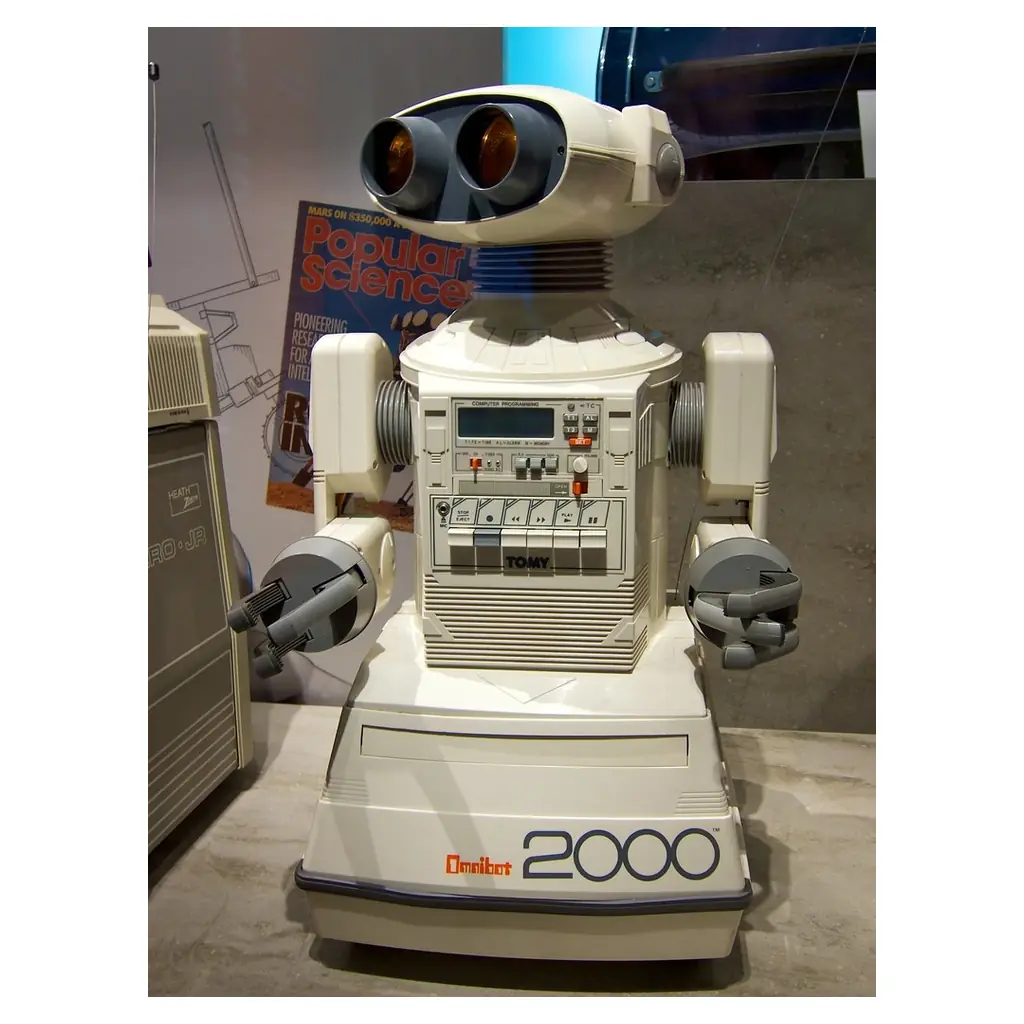
Tomy’s Omnibot appeared in 1984. The small robot translated a futuristic household helper into a toy someone could operate in a real room.
Its face and moving body gave it a character beyond an ordinary remote-control vehicle. The attraction was the promise of a machine joining family life.
The idea sat beside television watches and other ambitious electronics. Features varied between Omnibot models, so one model’s abilities should not be assigned to the whole range.
17. Hello Kitty stationery and small gifts
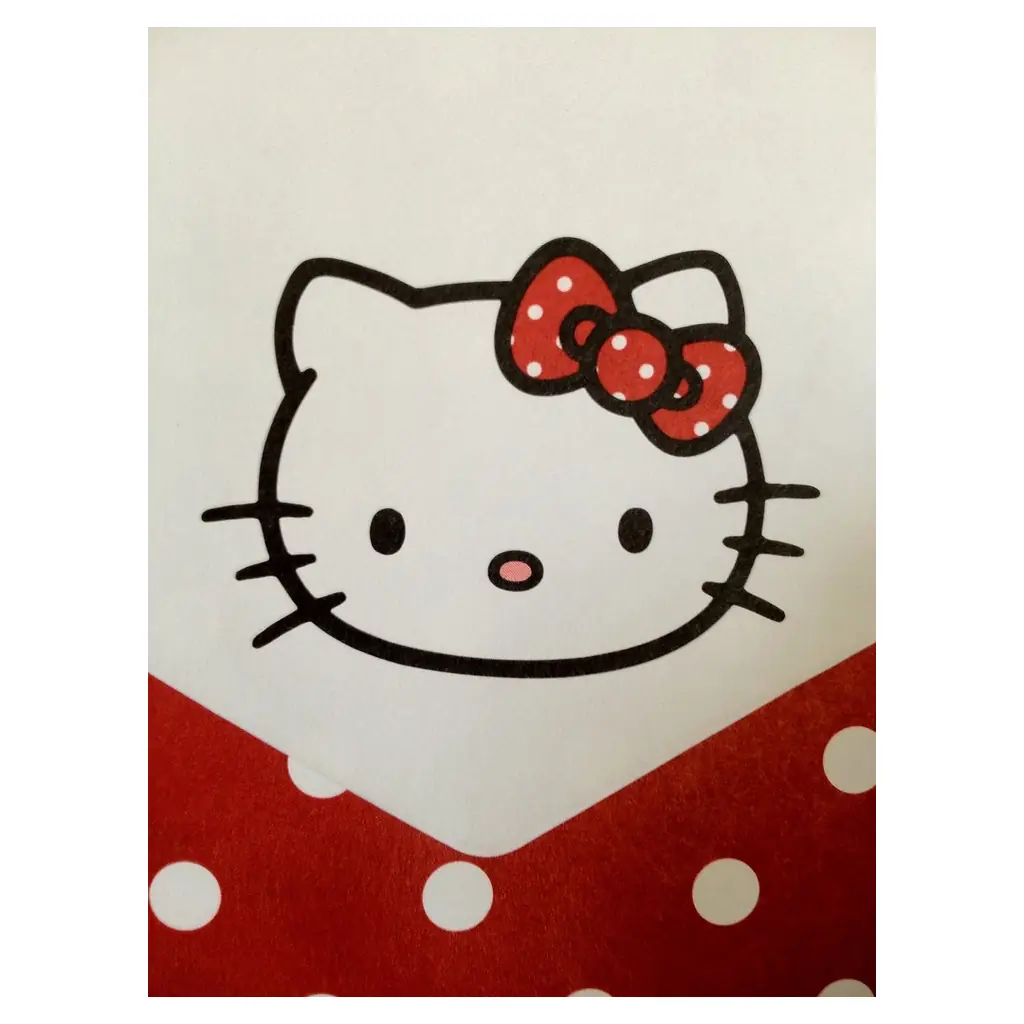
Sanrio designed Hello Kitty in 1974. The character reached readers through small everyday products, not just a conventional toy with one fixed way to play.
A pencil case, little purse or sheet of stickers could make the same face part of school and home. The object’s usefulness helped keep it close at hand.
Collectors should check the individual product and its date. The character’s creation year does not mean every familiar design existed in 1974.
18. Little Twin Stars on school supplies
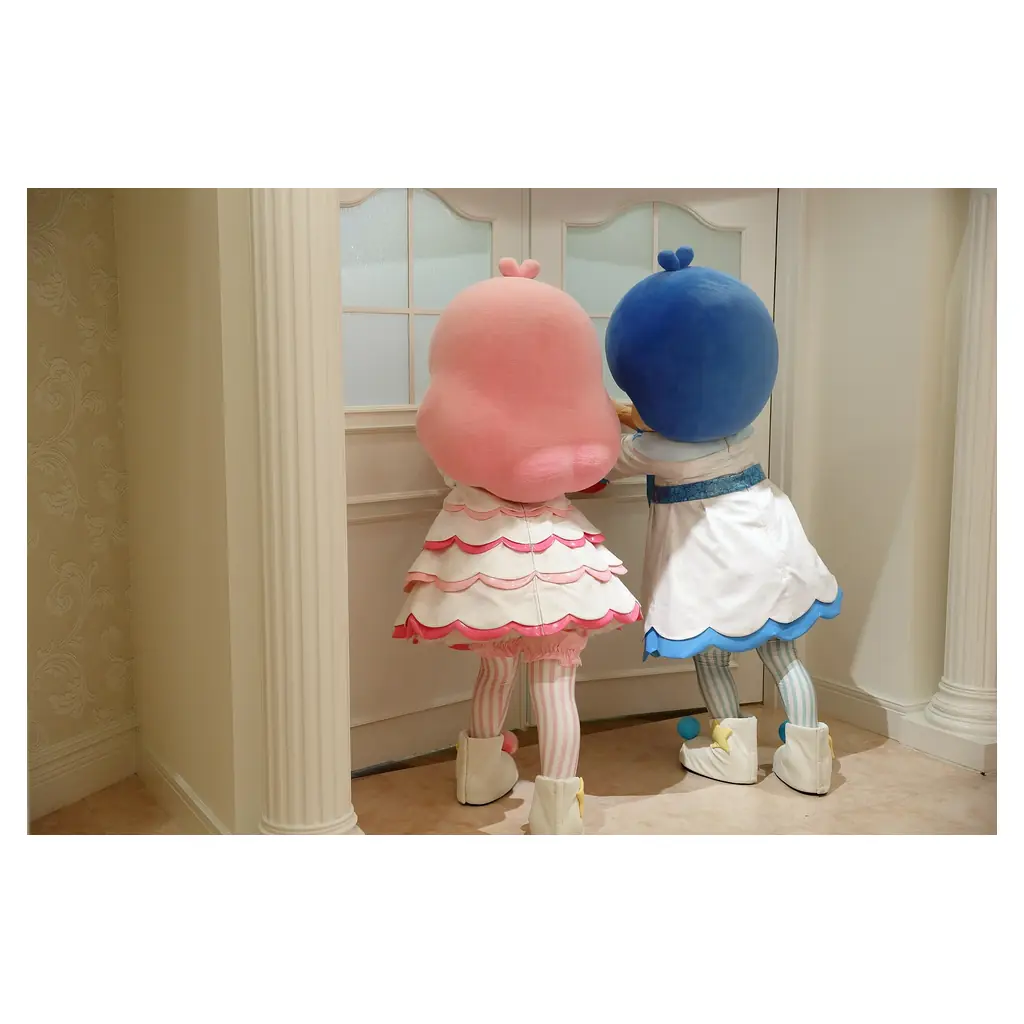
Sanrio’s Little Twin Stars emerged in 1975. Kiki and Lala offered another recognizable pair on stationery, accessories and gifts.
Soft colors and a repeated character design connected otherwise different objects. A matching eraser and notebook could feel like a small collection.
These were also potential suitcase gifts, as discussed in the Japanese possessions families brought home. A surviving item can be described accurately without claiming it came from a particular family posting.
19. Monchhichi dolls
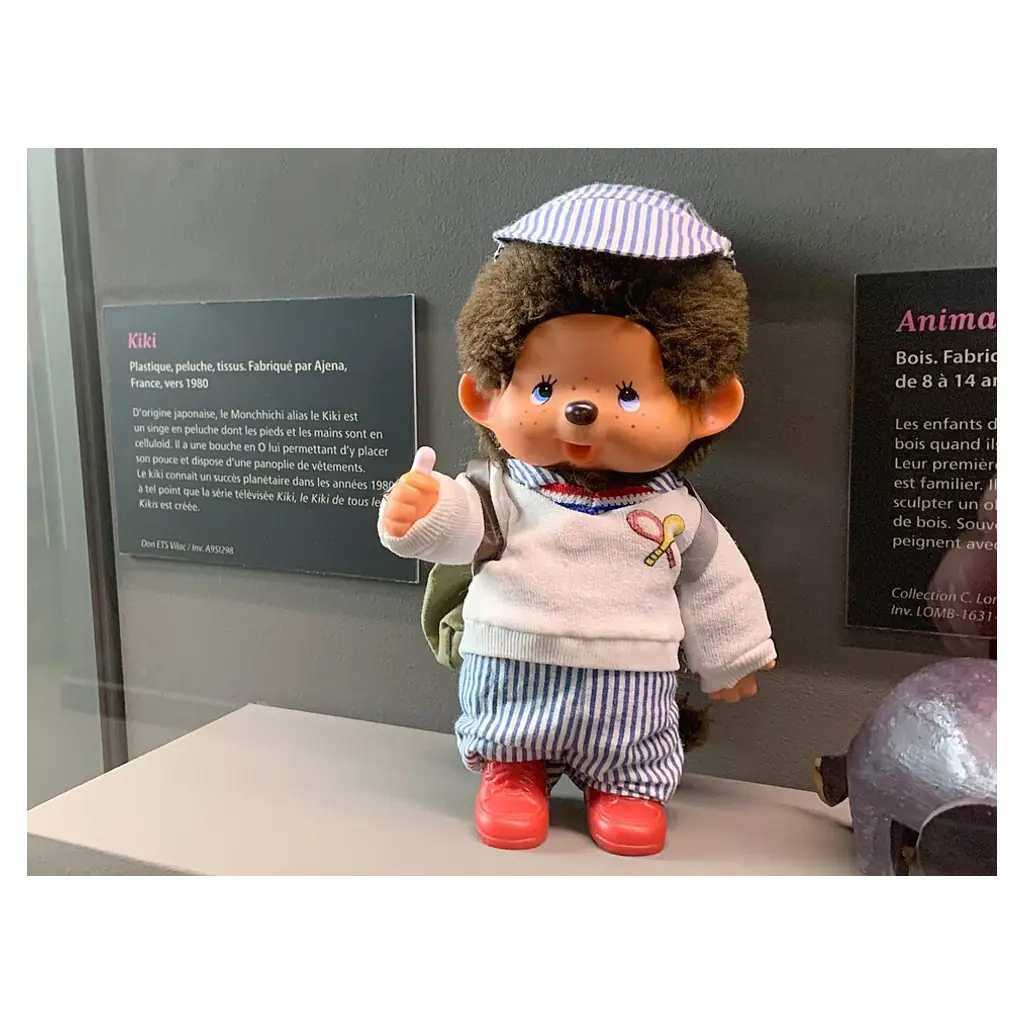
Sekiguchi introduced Monchhichi in 1974. The soft-bodied doll’s molded face, hands and thumb-sucking pose gave it a distinctive look.
It offered a different form of Japanese toy nostalgia from robots and electronic games. The tactile features mattered as much as a character story.
Different countries and periods used different distribution and marketing. An identifying label or period package is stronger evidence than a seller’s broad description of something as “vintage.” The pictured 1980s Kiki is a French-market licensed version of the Monchhichi doll; names and packaging varied by market.
20. Tamiya radio-controlled car kits
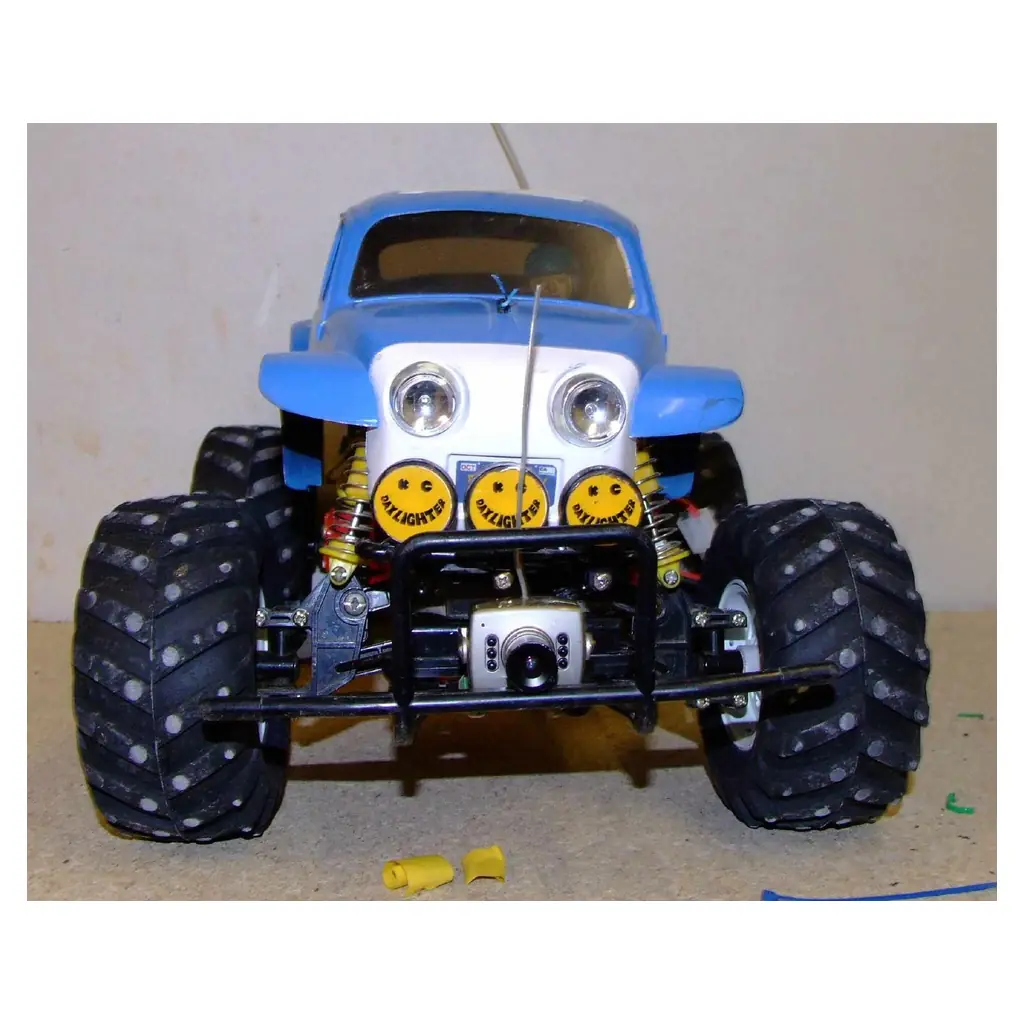
Tamiya’s Porsche 934 RC car dates to 1976. Building a model and then driving it linked careful assembly with the satisfaction of seeing it move.
The kit asked for more preparation than a pocket toy. Wheels, bodywork and a radio-control system made the finished result feel like a project.
For some families, such objects became part of the wider memory of an overseas childhood. Modern anniversary kits deliberately revisit that history and must be labeled as reproductions.
Sources and further reading
- museumofplay.org
- museumofplay.org
- nintendo.com
- nintendo.com
- museumofplay.org
- museumofplay.org
- iwataasks.nintendo.com
- captown.capcom.com
- takaratomy.co.jp
- airandspace.si.edu
- voltron.com
- micropola.org
- us.tomy.com
- takaratomy.co.jp
- corporate.sanrio.co.jp
- corporate.sanrio.co.jp
- monchhichi.co.jp
- tamiyausa.com
Image credits
- Space Invaders in Computerspielemuseum Berlin.jpg by Bsivko; CC BY-SA 4.0. Scaled to fit a square canvas and converted to WebP.
- TOMY LSI PACMAN handheld electronic game.jpg by うぃき野郎; retouched by Pittigrilli; CC BY-SA 4.0. Scaled to fit a square canvas and converted to WebP.
- Nintendo Entertainment System NES (1985) 2.jpg by Jzh2074; CC BY-SA 4.0. Scaled to fit a square canvas and converted to WebP.
- Game-Boy-Original.jpg by Evan-Amos; Public domain. Scaled to fit a square canvas and converted to WebP.
- Nintendo Oil Panic Game & Watch, Model OP-51, Made In Japan, Copyright 1982 (Electronic Handheld Game).jpg by Joe Haupt from USA; CC BY-SA 2.0. Scaled to fit a square canvas and converted to WebP.
- Kiki-Musee-du-Jouet-Moirans39-byRundvald.jpg by Rundvald; CC BY-SA 4.0. Scaled to fit a square canvas and converted to WebP.
- Donkey Kong arcade - zapwizard 34102189.jpg by Joshua Driggs (ZapWizard) from Austin, Texas; CC BY-SA 2.0. Cropped or fitted to a square, resized and converted to WebP. No subject details altered.
- 1の1面 (4929624990).jpg by Hajime Nagahata; CC BY 2.0. Cropped or fitted to a square, resized and converted to WebP. No subject details altered.
- The Legend of Zelda - Golden Catridge.jpg by Dave or Atox; CC BY 2.0. Cropped or fitted to a square, resized and converted to WebP. No subject details altered.
- Optimus Prime patent.png by Hiroyuki Obara.; Public domain. Cropped or fitted to a square, resized and converted to WebP. No subject details altered.
- Voltron by Mr Marmot; BY-SA 2.0. Cropped or fitted to a square, resized and converted to WebP. No subject details altered.
- Acroyear by Fuyoh!; BY 2.0. Cropped or fitted to a square, resized and converted to WebP. No subject details altered.
- NISSAN Safari EXTRA VAN DX - TOMICA LIMITED VINTAGE NEO. by MIKI Yoshihito. (#mikiyoshihito); BY 2.0. Cropped or fitted to a square, resized and converted to WebP. No subject details altered.
- 1.05.09- vroom!.jpg by Team Dalog; CC BY 2.0. Cropped or fitted to a square, resized and converted to WebP. No subject details altered.
- Shield Liger by JOE WU; BY 2.0. Cropped or fitted to a square, resized and converted to WebP. No subject details altered.
- Omnibot 2000 by donjd2; BY 2.0. Cropped or fitted to a square, resized and converted to WebP. No subject details altered.
- Hello Kitty Stationery by seishin17; BY-SA 2.0. Cropped or fitted to a square, resized and converted to WebP. No subject details altered.
- キキ・ララ (14204653750).jpg by Tomohiro Ohtake; CC BY-SA 2.0. Cropped or fitted to a square, resized and converted to WebP. No subject details altered.
- Tamiya Monster Beetle with TV camera! 2 (143002696).jpg by Les Chatfield from Brighton, England; CC BY 2.0. Cropped or fitted to a square, resized and converted to WebP. No subject details altered.