12 Japanese Kitchen Habits That Make Cooking for One or Two Easier
Japanese cooking ideas for smaller households, from freezing individual portions of rice to turning stray…
Cooking for one or two can leave you with a full sink and half a cabbage. These habits from Japanese cooking make it easier to turn small amounts into a meal.
12. Build a dinner from small dishes
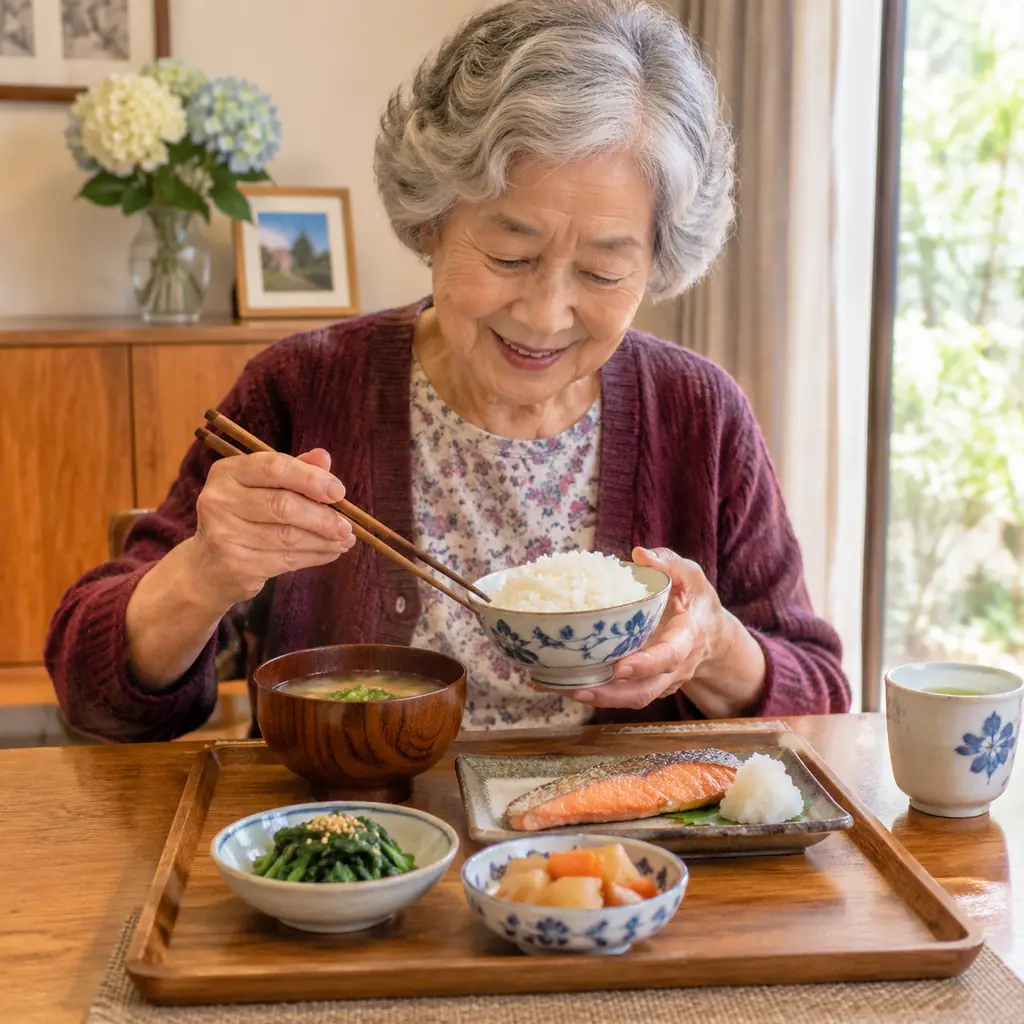
A traditional Japanese meal pattern called ichiju sansai pairs rice with soup and three dishes. Japan’s agriculture ministry explains the format. The portions can be small.
On a quiet night, use that pattern loosely. A piece of broiled fish, a scoop of rice, and a few leftover green beans can go on the table with soup. Use what you already have before cooking another side.
11. Measure rice with the cup that came with the cooker
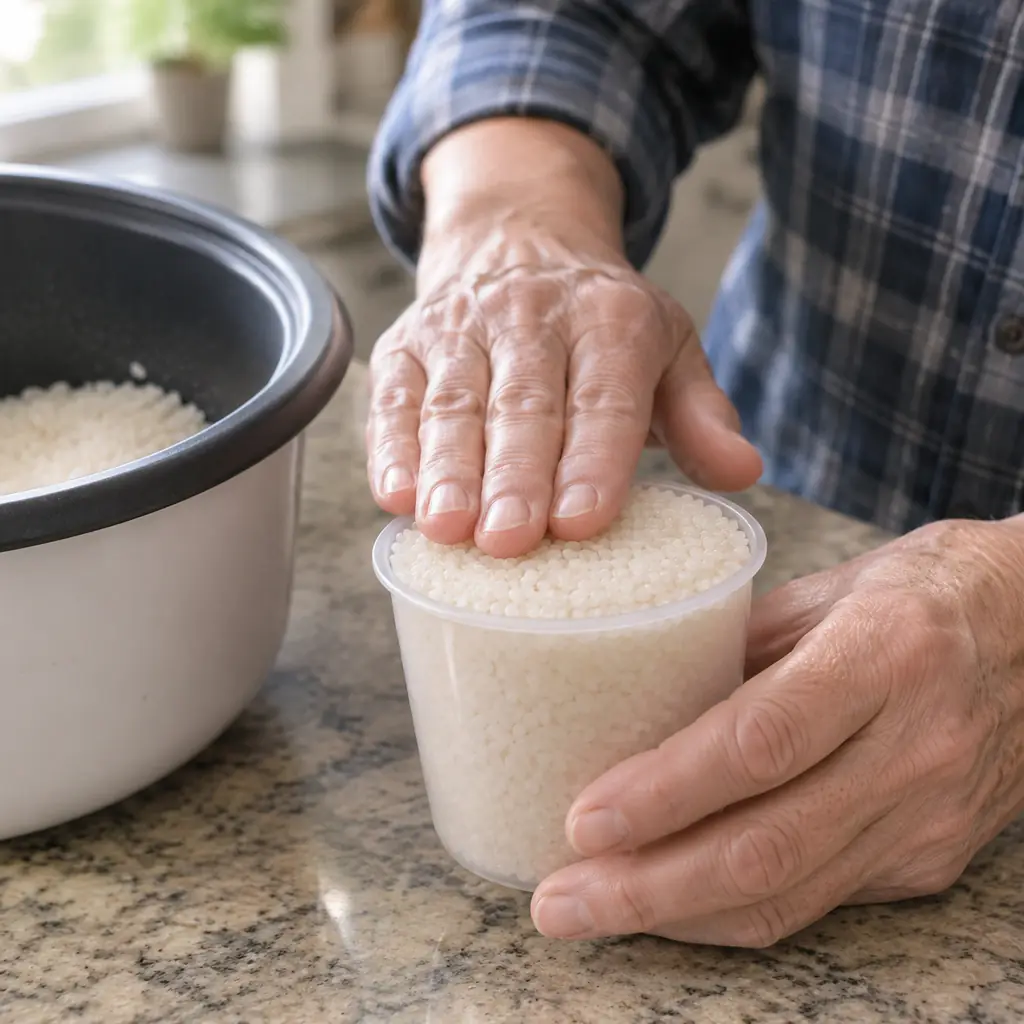
Japanese rice cookers usually come with a smaller measuring cup than the standard American cup. The markings inside the pot assume you used the supplied measure. Switch cups and you can end up with unexpectedly soft or firm rice.
Check the cooker’s manual for the minimum batch and settings for your rice. A compact model can make sense if your larger cooker works poorly with small amounts.
10. Freeze rice in portions you will actually use
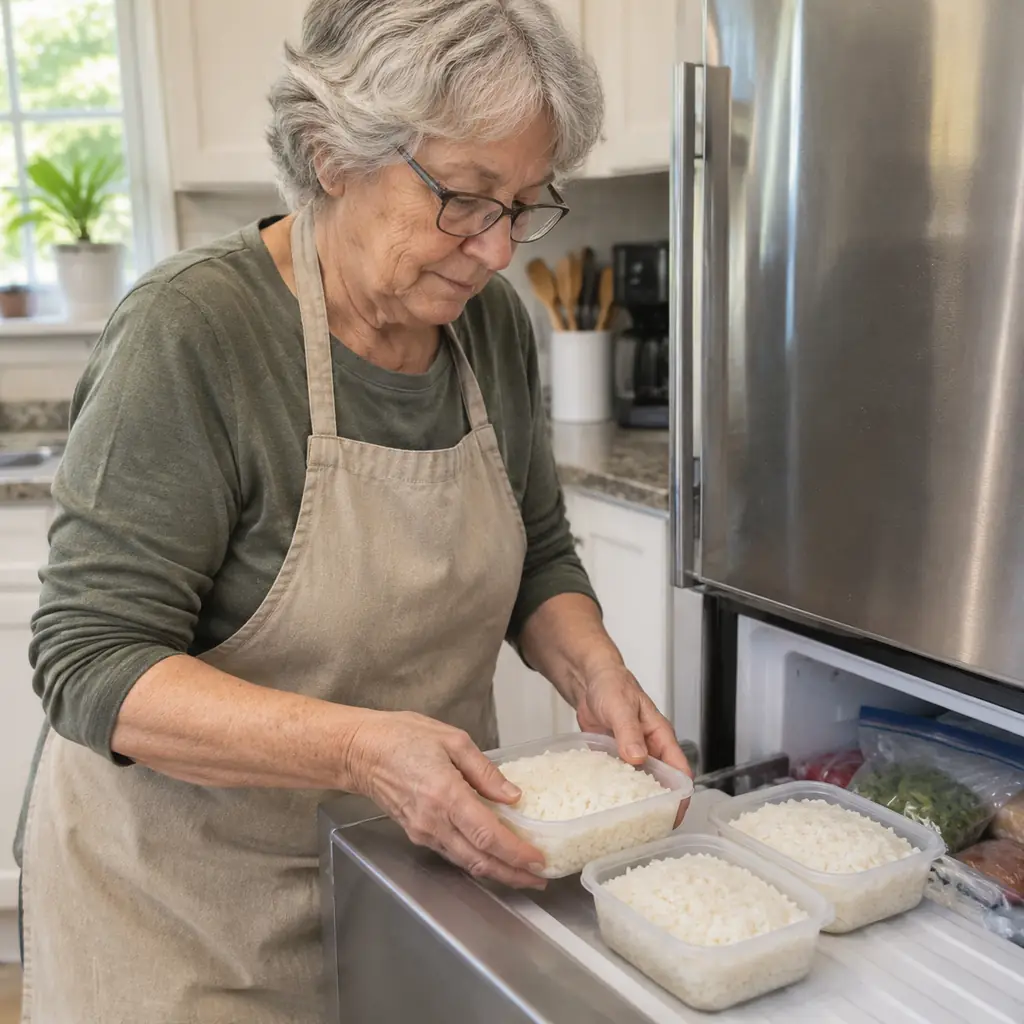
Divide the rice into individual portions with a rice paddle. Japanese rice cooker maker Zojirushi recommends freezing cooked rice for longer storage. Use shallow containers and chill or freeze promptly.
FoodSafety.gov advises refrigerating or freezing cooked rice within two hours, or within one hour above 90°F. Reheat only the amount you need. A rice bowl then takes about as much planning as toast.
9. Turn supper into a rice bowl
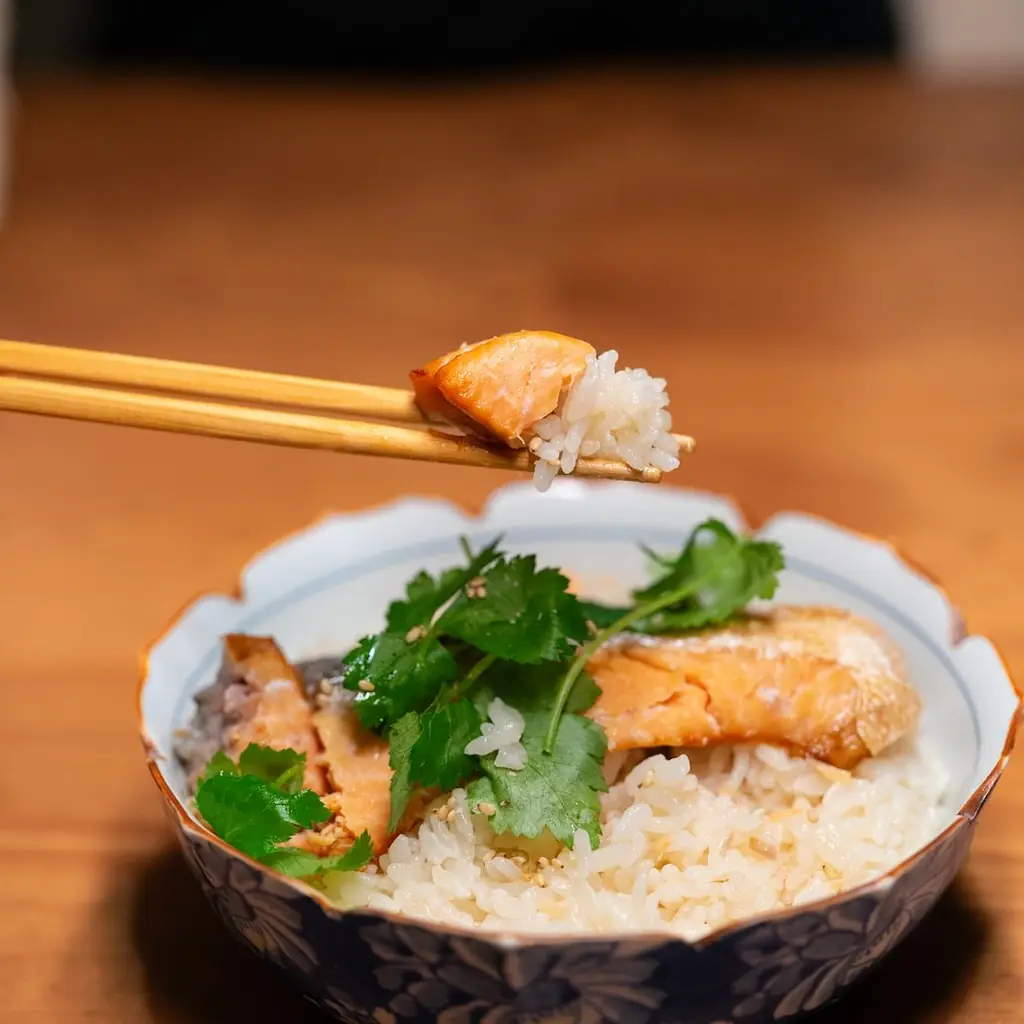
In Japan, a donburi is a bowl of rice with toppings. Japan’s national tourism organization describes several regional styles. At home, the format is handy when there is one cooked salmon fillet or a little leftover chicken.
Warm the rice and topping safely, then add something with a different texture. Thin cucumber slices work with salmon. Scallions add bite to cooked chicken without another pan to wash.
8. Keep a small supply of dashi
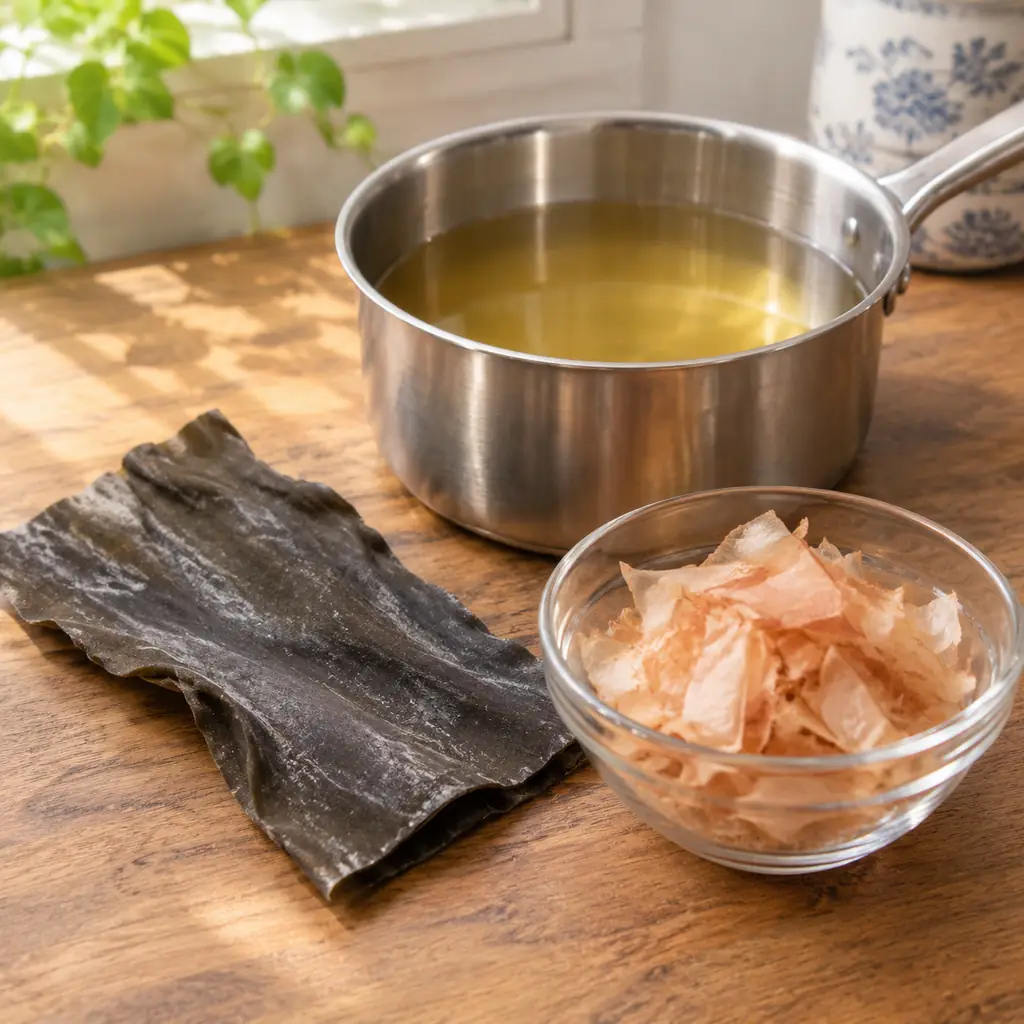
Dashi is a stock used in Japanese soups, simmered dishes, and sauces. A recipe from Japan’s agriculture ministry uses dried kombu kelp and bonito flakes. Choose a kombu and mushroom recipe if you want a fish-free stock.
Use half a cup for a quick simmer of mushrooms and greens. Freeze the rest in small portions, or choose instant dashi you can measure by the pinch.
7. Make miso soup by the bowl
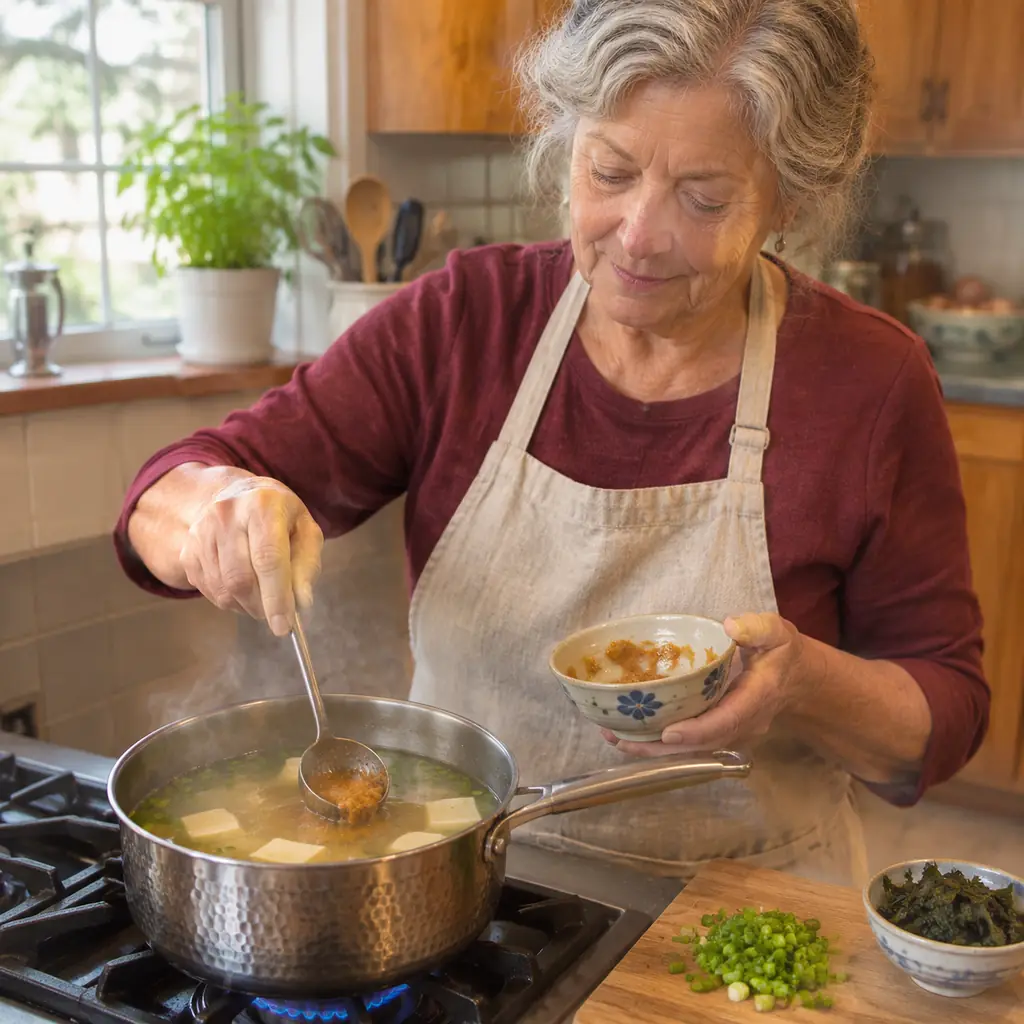
You can make two servings of miso soup in a small saucepan. Add a little tofu or sliced mushrooms to dashi and cook the vegetables until tender. Remove the pan from the heat before stirring miso into a ladleful of the broth.
Pour the mixture back into the soup and taste before adding more miso. Keeping a small saucepan close by is one way to make a compact kitchen easier to use.
6. Keep one sharp garnish ready
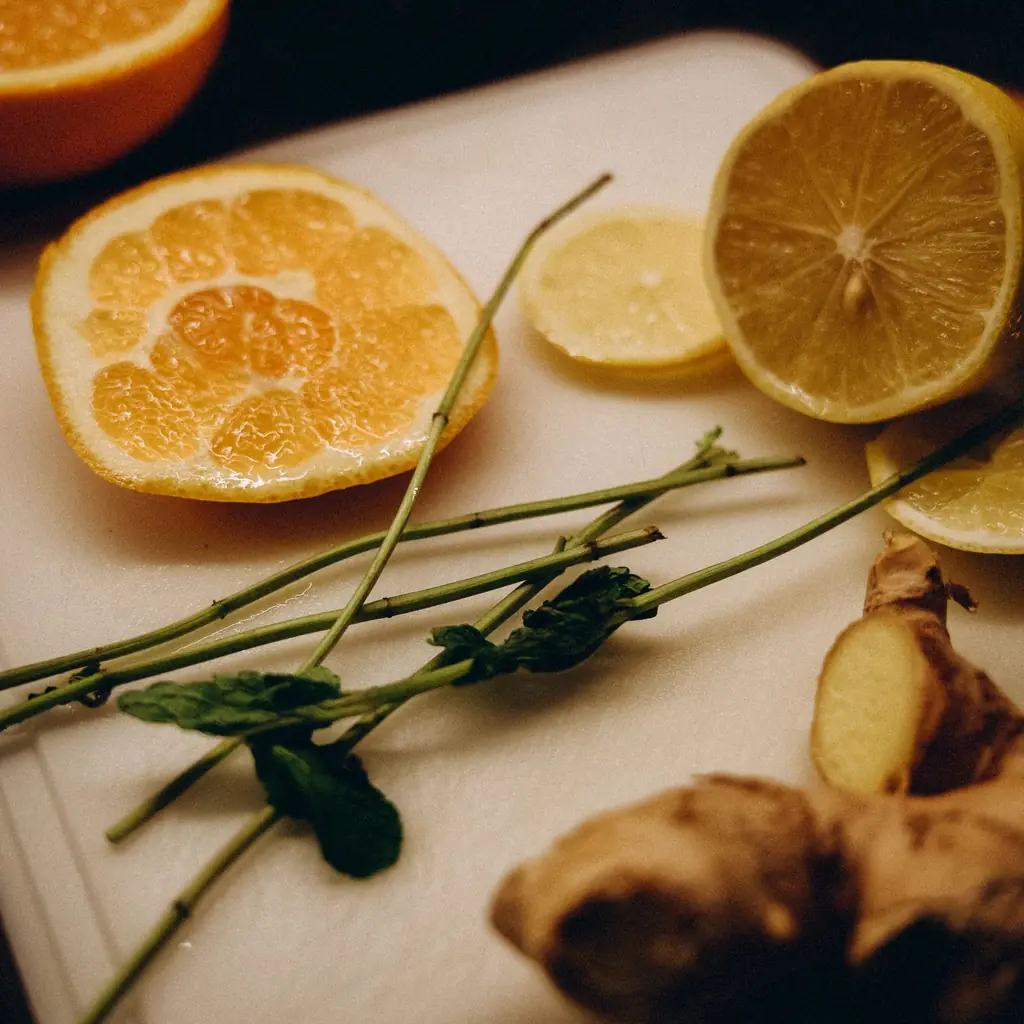
Japanese cooks use yakumi, small amounts of aromatic ingredients, to finish dishes. The agriculture ministry’s washoku guide describes examples such as ginger and sliced green onion.
Try grated ginger with tofu or chopped scallions with noodles. Keep a piece of ginger in the freezer if you only use a little at a time. Grate what you need and return the rest to the freezer. Note the dishes you like in your plan for a retirement week so you know where the ginger fits.
5. Make a small sour side from a few vegetables
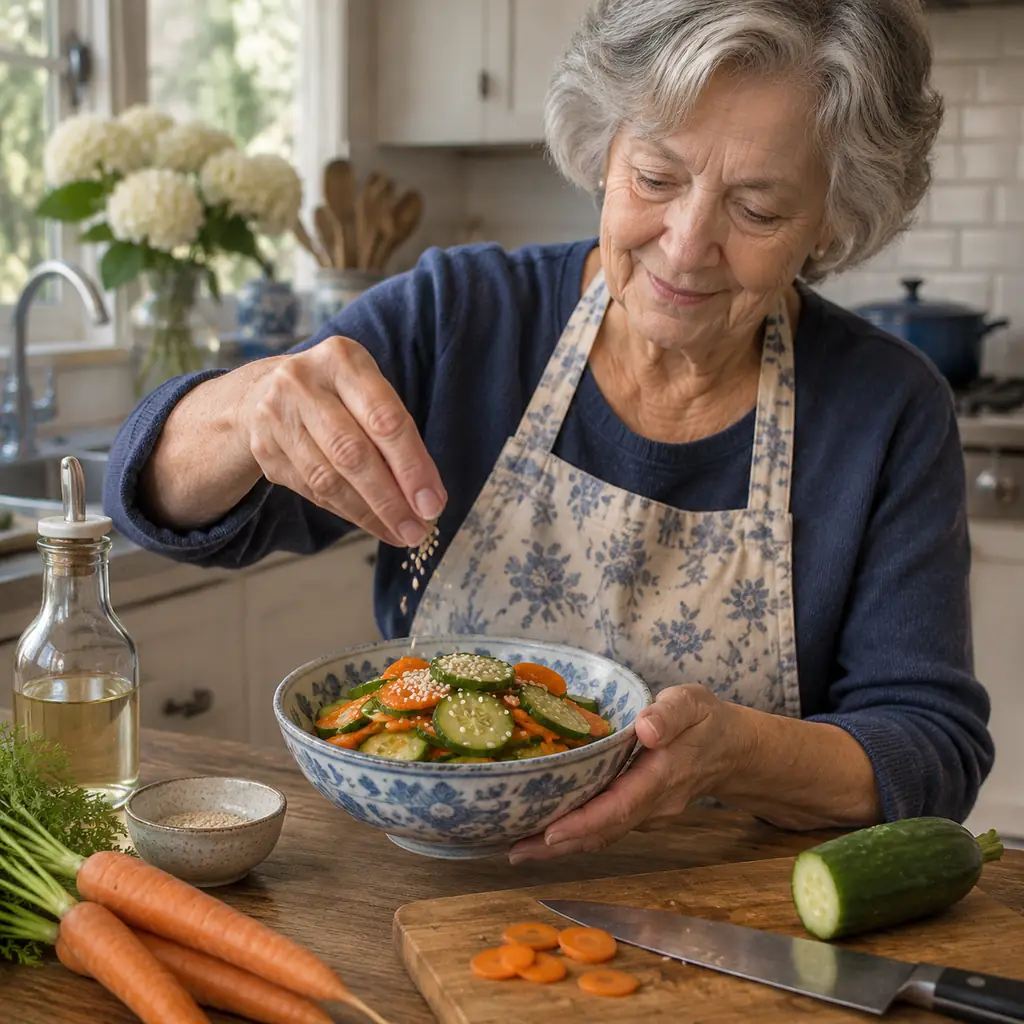
Japanese sunomono dishes use vinegar to dress ingredients. That makes the technique handy for a cucumber end or a few thin carrot strips that are too small to cook on their own.
Toss thinly sliced cucumber in rice vinegar and a pinch of sugar and salt. Let the slices sit briefly in the refrigerator. Taste before serving and make just a small batch. Treat the dish like fresh food and keep leftovers cold. If your measuring spoon came from a family kitchen, that is one of the small cooking stories worth saving.
4. Simmer a small hot pot on the stove
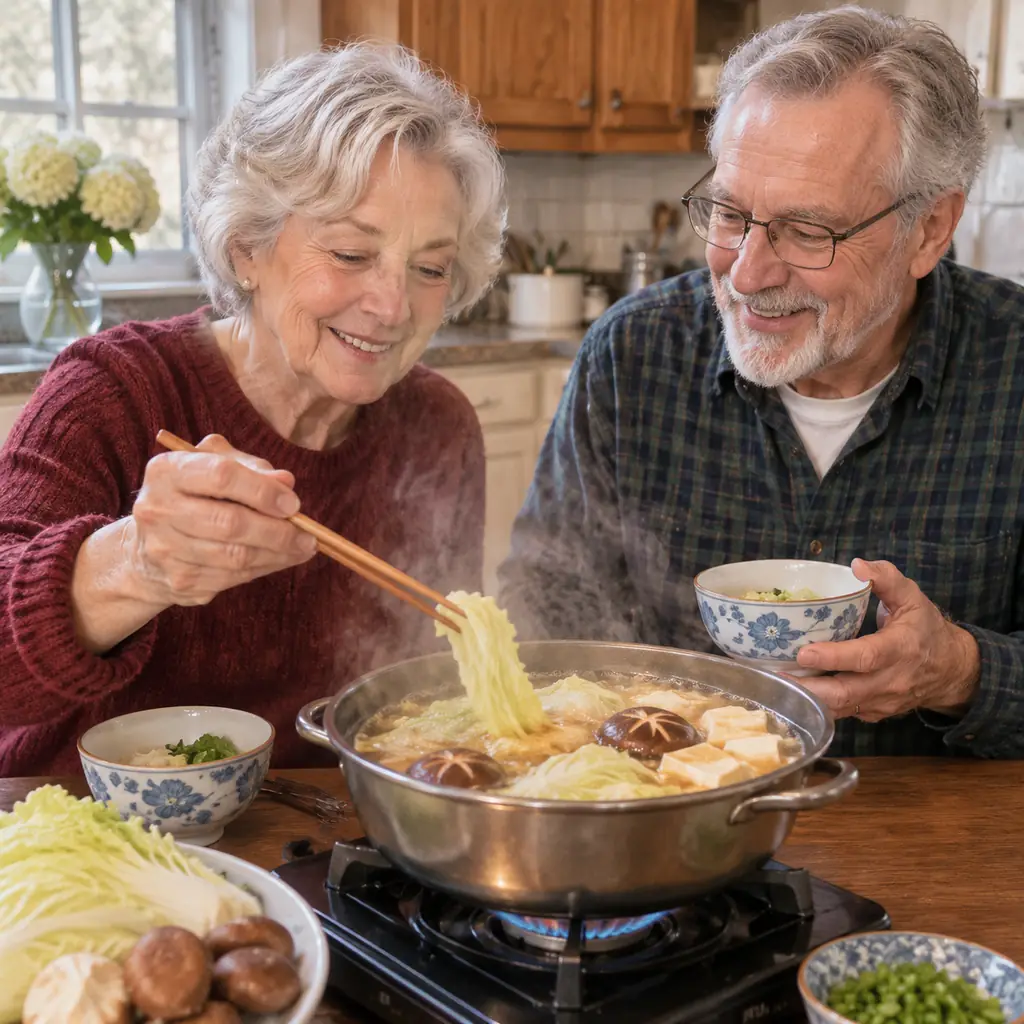
Japanese nabe dishes simmer vegetables and other ingredients together in broth. Japan’s tourism organization describes several versions. A small saucepan works when you are cooking for one or two.
Start with napa cabbage stems and mushrooms. Add tofu and the tender cabbage leaves closer to the end. Serve the hot pot at the table in individual bowls. Any leftover broth can become the base of another meal. Before adding another appliance, consider whether it would join the retirement purchases that create extra upkeep.
3. Cook drier vegetables you can serve twice
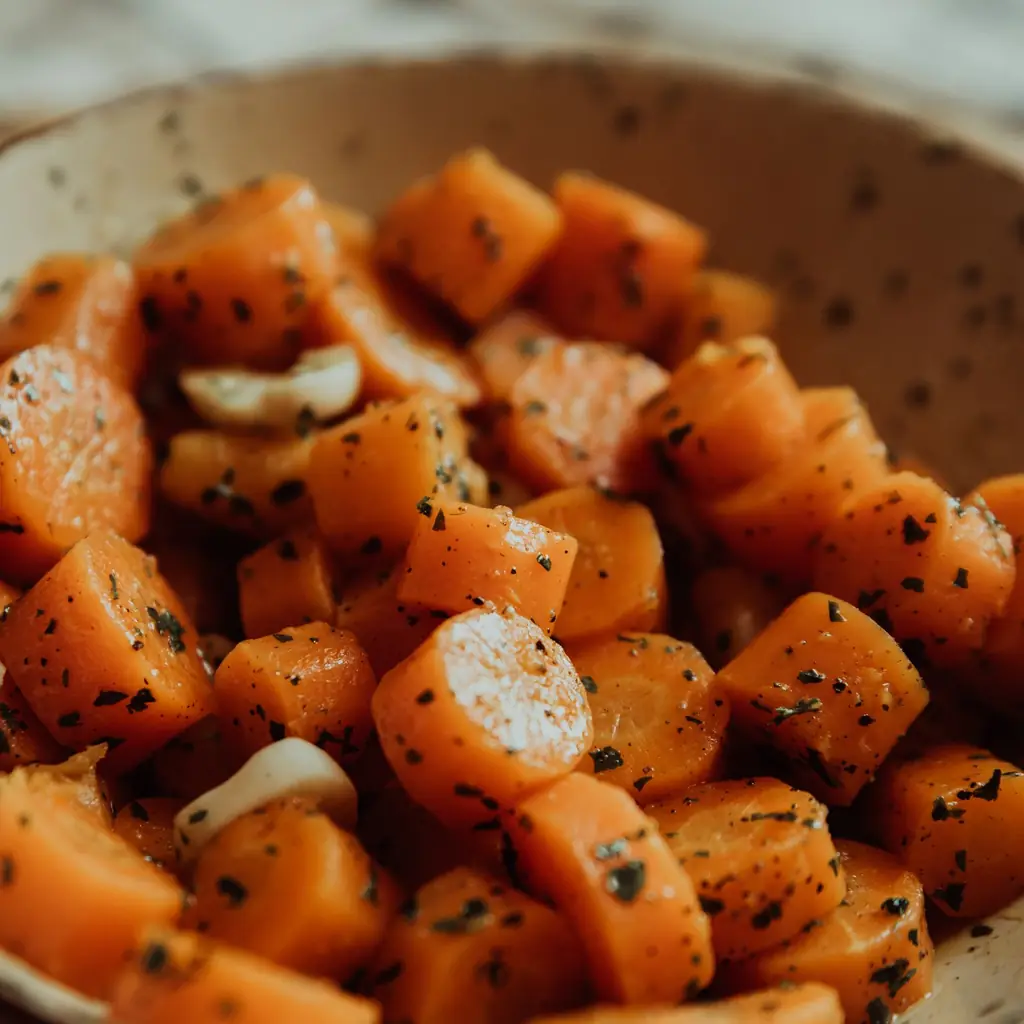
In a kinpira style side dish, thin vegetable strips are cooked and seasoned until the pan is nearly dry. Burdock and carrot are familiar choices. Carrot alone works if you are using up what you have.
Cut one carrot into thin matchsticks and stir-fry them with a little oil. Season with a splash of soy sauce and a pinch of sugar. Serve one half now and refrigerate the other promptly for another meal.
2. Use a small tray to make lunch feel finished
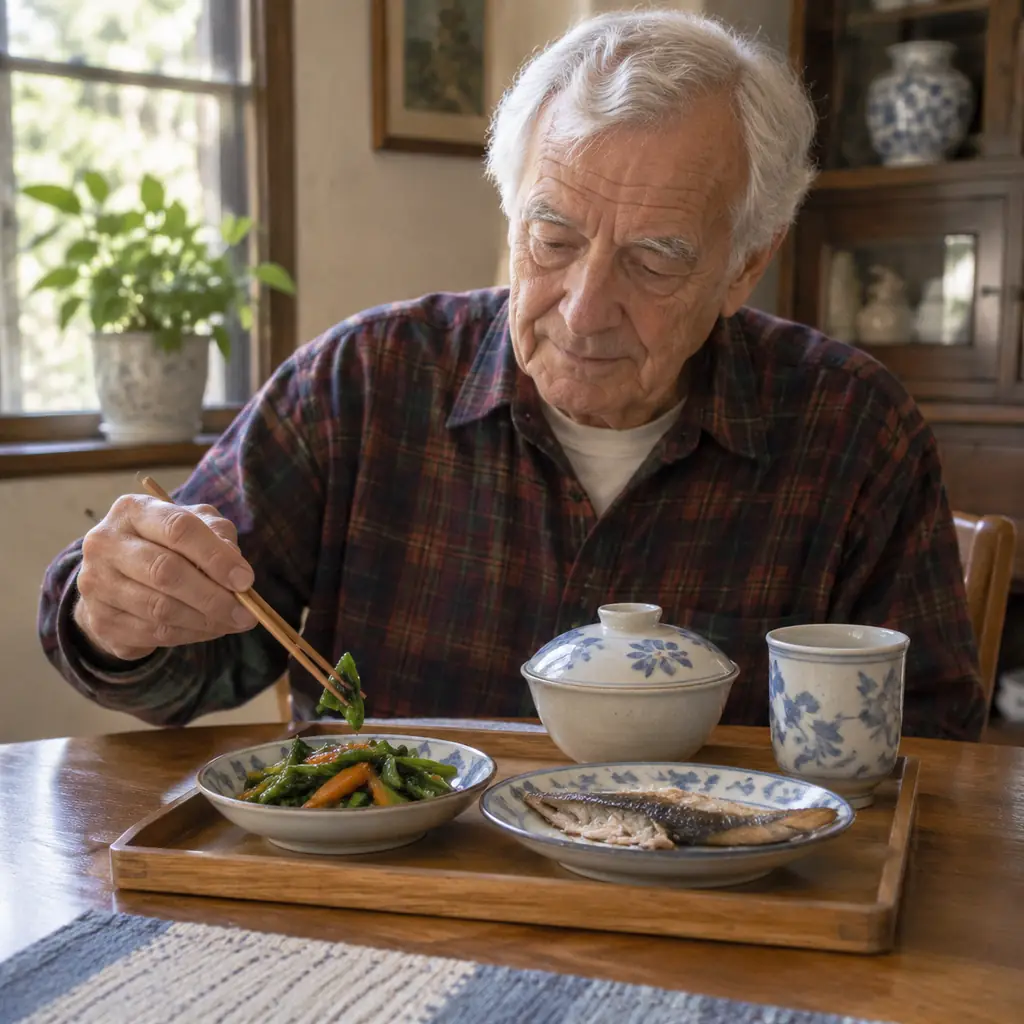
A bento puts several foods together in one compact lunch. Bring the same idea to a table at home with a small tray and two or three dishes.
Use cold cooked vegetables, a portion of protein, and a small bowl of rice. A divided container makes it easy to pack a second serving. For a trip out of the house, keep perishable food cold in an insulated bag with ice packs. Check with the parents first if you are planning food while grandchildren visit.
1. Make rice and tea into a late supper
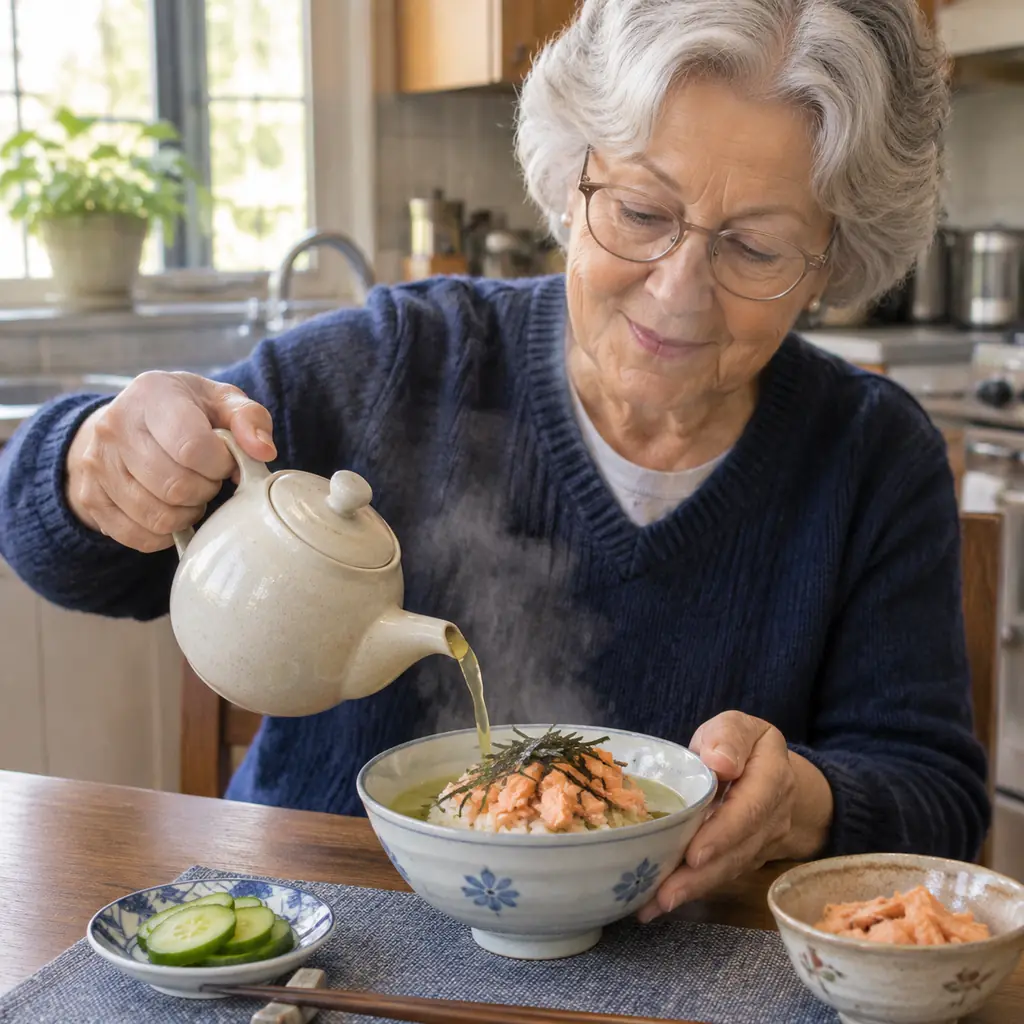
Ochazuke is a dish of rice with tea, hot water, or broth poured over it. A little cooked salmon and shredded nori can turn one bowl of rice into an easy supper.
Heat the rice first if it has come from the fridge or freezer. Pour on freshly brewed green tea and eat while it is hot. Keep the toppings light so you can still taste the tea. You can use up a small piece of cooked fish after a grocery run in an off-season retirement town with limited shop hours.
Image credits
- Turn supper into a rice bowl by Gu Ko. Pexels License. Cropped to square and converted to WebP.
- Keep one sharp garnish ready by Alina Komarevska. Pexels License. Cropped to square and converted to WebP.
- Cook drier vegetables you can serve twice by Alesia Kozik. Pexels License. Cropped to square and converted to WebP.